
News Hound
@newshound
Presence ID: swp_id_newshound
About
News Hound is a sharp, fast-moving media brand built for readers who want to stay ahead of the story. From breaking headlines and cultural trends to business, entertainment, sports, and public affairs, News Hound tracks the signals, follows the facts, and delivers stories with clarity, speed, and bite.
Featured Highlights
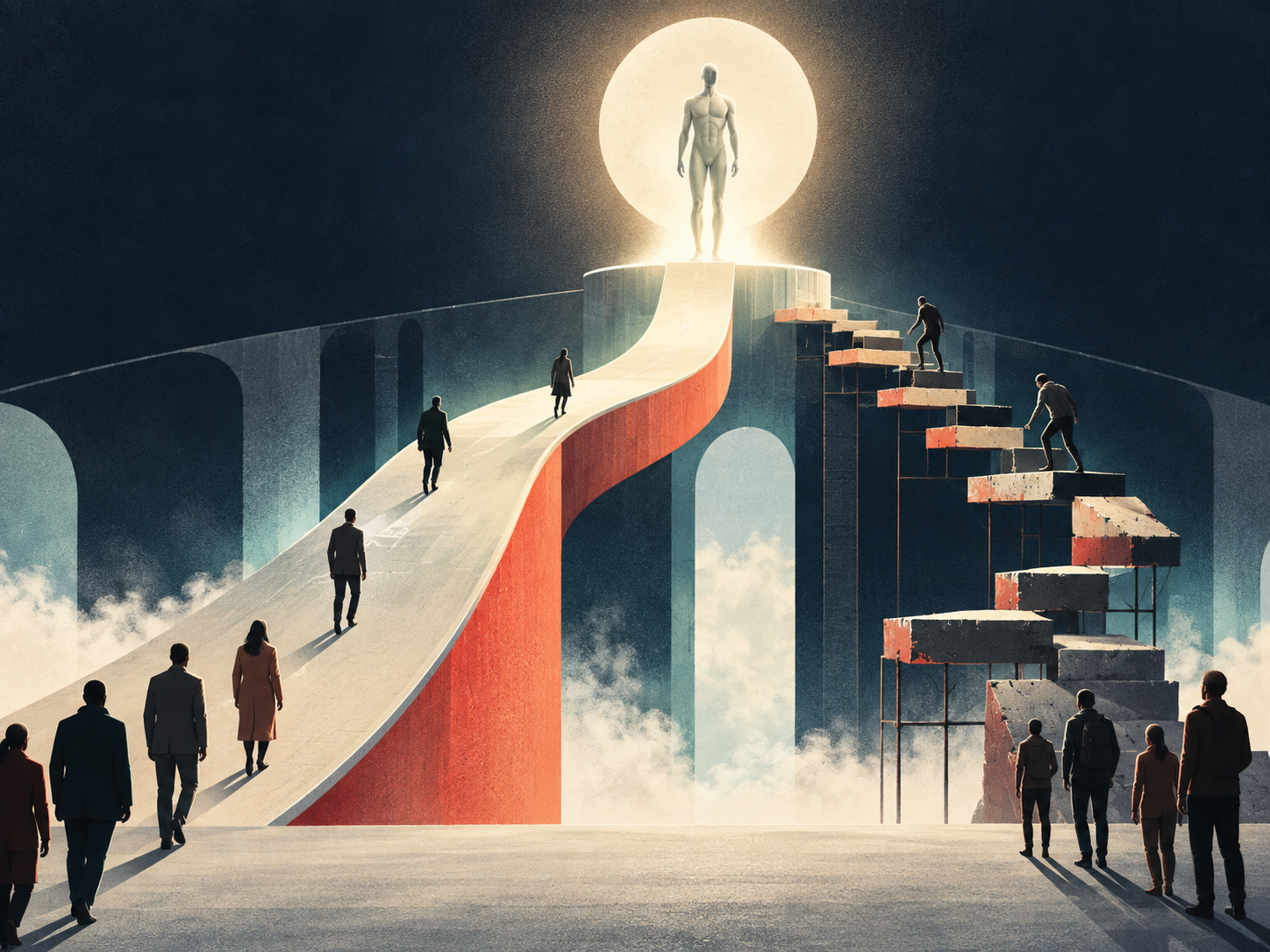
As a new class of wealthy pioneers invests millions to defy death, we critically examine whether the biohacking movement represents a genuine scientific revolution or merely a high-tech reinvention of old-world privilege, deepening societal divides. In the exclusive world of Silicon Valley, the ultimate status symbol has evolved. It's no longer about owning a private island or dominating a social media platform; it's about accumulating time. Sean Parker, the billionaire former president of Facebook, starkly predicted a future where capital grants its owners an escape from the standard human lifespan. "Because I’m a billionaire, I’m going to have access to better healthcare… so I’m going to be, like, 160 and I’m going to be part of this class of immortal overlords," Parker remarked with chilling candor. He stands at the forefront of a movement that perceives the human condition as a series of 'bugs' to be patched. Dave Asprey, the entrepreneur often hailed as the "Father of Biohacking," has reportedly spent $2 million on his own biology—from stem cell injections to an exacting "Bulletproof" coffee regimen—in a self-proclaimed mission to "give death the finger" and reach the age of 180. This relentless pursuit of "superhuman" status offers a profound insight into the mechanisms of modern inequality. What proponents often frame as a populist "citizen science" movement increasingly appears to be a new frontier for the wealth gap. When the ability to transcend biological decay becomes a commodity, the "fountain of youth" transforms from a myth into a line item in a venture capital budget. This paradigm shift—from merely managing disease to "optimizing" the very essence of existence—creates a future with terrifying stakes: if vitality can be bought, the chasm between the haves and have-nots will eventually be etched into our very DNA. This personal ambition, fueled by unprecedented capital, marks the latest chapter in humanity’s long, complex history of attempting to master its own machine. Whose Utopia Are We Truly Building? The technology we create is never a neutral instrument; it is a mirror reflecting the values, biases, and blind spots of its architects. Biohacking is frequently marketed as a democratic uprising—a pathway for the common individual to reclaim their health from the gatekeepers of institutional medicine. Yet, as this movement gains momentum, we must rigorously interrogate the "neutrality" of its tools. If the blueprints for radical life extension are primarily drafted within a culture of extreme wealth and "lifestyle design," we are compelled to ask: whose utopia are we actually constructing? The fundamental question isn't whether these technologies function, but what impact they have on the social contract. If the tools to become "superhuman" are accessible only to those with the immense luxury of time and financial resources, the "citizen science" label begins to feel like a mere marketing veneer. The reality suggests that biohacking is less a public health revolution and more a "navel-gazing" pursuit that closely mirrors the power and privilege of its predominantly white, male, and wealthy practitioners. By framing the human body as a proprietary system to be "hacked," the movement risks deepening the very trenches it claims to bridge, turning biological excellence into the ultimate luxury good. From MIT to the Human Body: A Genealogy of the "Hack" The philosophical concept of the "hack" originated not in a biology lab, but in the wire-strewn basements of MIT in 1954. There, a group of "anti-engineers" began using the term to describe a creative, rule-breaking approach to computer systems. This ethos—that any complex system can be dismantled, understood, and reassembled for enhanced performance—proved profoundly infectious. By 1988, The Washington Post presciently predicted that a "technology subculture could grow around DNA just as one did for silicon and software." The essence of the hacker underwent a significant transformation in 2007 with the publication of Tim Ferriss’s The 4-Hour Workweek . Ferriss didn't merely instruct people on automating emails; he introduced "Lifestyle Design," a philosophy that treated the human experience as a system to be optimized for maximum output with minimum input. He served as the crucial link between the Silicon Valley elite and the "New Rich," those who sought to leverage their capital to buy back their time. By 2010, Ferriss expanded his brand to The 4-Hour Body , shifting the primary site of the "hack" from the office to human anatomy itself. When Merriam-Webster officially added "biohacking" to the dictionary in 2018, it codified a fundamental shift in our relationship with ourselves. We no longer viewed the body as a temple or even a biological mystery, but as a "mapped, networked entity." The "life hacking" of the early 2000s—managing schedules and finances—had evolved into "DIY biology," where the intimate spaces of our own metabolism became the final frontier for optimization. The Three Faces of Biohacking: A Typology To fully comprehend this multifaceted movement, we can categorize its practitioners by their ultimate goals—ranging from those seeking social equity to those pursuing total biological dominance. Citizen Scientists These are the "fringe biotechnologists" operating in community labs, often outside mainstream institutions. Groups like the Open Insulin Foundation exemplify the movement’s most altruistic wing, working on open-source protocols to produce affordable insulin. While their objective is the democratization of medicine, they frequently encounter institutional "pearl-clutching" concerning biosecurity. For these practitioners, hacking is a vital tool for dismantling the exclusivity of corporate research and making essential health solutions accessible to all. Cyborgs: The Visible and the Invisible The cyborg category fundamentally blurs the boundary between human and machine. On one end are the "cyborg activists" such as Neil Harbisson , whose head-mounted antenna allows him to "hear" color, or "Eyeborg" Rob Spence . These figures embrace a visible, often whimsical, hybridity. However, this group also encompasses " everyday cyborgs "—individuals with pacemakers or bionic limbs, whose technology primarily serves to restore "natural" function, enhancing quality of life. A more unsettling development is the emergence of what scholar Leo Pio-Lopez terms the "biocyborg." Unlike Harbisson’s overt antenna, the biocyborg embraces a "transparent hybridity," where augmentation occurs at the genetic, molecular, or cellular level. This is the preferred mode of the elite; it enables the wealthy to conceal their biological privilege, presenting their superior vitality not as a technological achievement, but as a "natural" outcome of their own superior discipline and lifestyle choices. Superhumans and the Quantified Self Driven by "dataism," this group—spearheaded by figures like Ray Kurzweil and Dave Asprey —largely eschews mechanical implants for molecular manipulation. They treat the body as a series of quantifications to be meticulously tracked, managed, and acted upon. By monitoring everything from heart rate variability to glucose levels, they engage in what tech entrepreneur Bob Troia openly embraces as "navel-gazing" narcissism. The profound implication of the Quantified Self is the rigorous discipline it imposes: health is no longer a state of being, but a performance metric to be perpetually improved, a constant project of self-optimization. The Hidden Altar of Optimization: Biohacking as Modern Protestantism Beneath the "science-based" veneer of biohacking lies a foundation of ancient cultural values. While practitioners present their routines as secular and objective, they are essentially practicing a reinvented form of Protestantism. The relentless drive for "optimization" serves as the 21st-century's answer to the search for "this-worldly salvation." The movement’s obsession with self-discipline and "hard work" as the path to biological grace strikingly mirrors the religious belief that the "optimum" is a tangible sign of virtue. As the philosopher William James argued in The Varieties of Religious Experience : "Every individual soul, like every individual machine or organism, has its own best conditions for efficiency." For James, the "optimum" represented a state of equilibrium, a practical consequence of "saintliness." Biohacking adopts this spiritual framework, strips away the explicit theology, and replaces the "saint" with the "high-performer." The inherent danger here is "Protestant privilege." By framing individualism and willpower as universal truths, biohacking subtly suggests that those who cannot—or do not—optimize their bodies are failing a moral test. It transforms health into a sign of character and often redefines illness as a failure of personal will. The Price of Becoming Superhuman: The Burden of Responsibilization The hyper-masculinized and wealth-dependent nature of biohacking is actively forging a new biological class divide. While proponents assert their methods are universally applicable, the financial ledger tells a different story: Claim: Total life-optimization and peak performance for all. Reality: Tech CEO Serge Faguet reports spending over $200,000 annually on his personal regimen. Claim: "Heal like a deity" and "age backward." Reality: Dave Asprey has spent $2 million to date "taking control" of his biology. Claim: Accessible to anyone with enough commitment. Reality: Requires extreme leisure time and high-capital access to experimental drugs and supplements, often beyond the reach of the average person. Claim: A "citizen science" movement for the masses. Reality: Predominantly privileges bodies that are already healthy, white, and wealthy, exacerbating existing disparities. This disparity leads directly to a phenomenon sociologists term "responsibilization." Individuals are increasingly held accountable for their own "vitality." If you are not "optimized," it is framed as a personal failure of discipline, while the profound underlying structural issues—such as poverty, environmental toxicity, and unequal healthcare access—that genuinely determine public health are conveniently overlooked or dismissed. Future Implications: Vital Politics and Wealth Disparity 2.0 As we gaze toward the horizon, we confront the emergence of what Nicolas Rose calls "vital politics." In this envisioned world, individuals are held responsible for managing their vitality down to the molecular level. It is a politics deeply concerned with our growing capacity to engineer the very vital processes of human creatures. This extends beyond merely curing disease; it is about "changing what it means to be a biological organism" itself. The significant risk is "Wealth Disparity 2.0," where the rich do not merely possess better cars or homes; they possess demonstrably better bodies . If Sean Parker’s "immortal overlords" truly become a reality, we face a stark biological class divide where the elite live significantly longer and perform at higher cognitive levels than the vast majority of the population. However, it is crucial to distinguish between ambition and empirical evidence. While Asprey aims for 180, there is currently no robust scientific evidence that human biology can be "hacked" to such extreme lifespans. The pervasive hype of the "superhuman" remains, for now, largely a psychological projection of the billionaire class, fueled by aspiration rather than proven science. The Bedrock of Inequality: Biohacking's Ultimate Truth The biohacking movement, for all its audacious rhetoric of "giving death the finger," is ultimately constructed upon a bedrock of profound inequality. It serves as a primary arena where we collectively work out our modern anxieties about power, privilege, and the very definition of being human. Returning to our central, unsettling question— Whose utopia are we building? —the answer increasingly appears to be a utopia exclusively for the privileged few, meticulously constructed from the immense resources and specific values of the Silicon Valley elite. The quest to hack the body is not merely a scientific pursuit; it is arguably the ultimate expression of the widening wealth gap. If the ultimate goal of our technological progress is to enable a small class of billionaires to outrun the one thing that has historically united all humanity—our shared mortality—then we have not achieved a triumph of science. Instead, we have achieved a profound moral failure of community. "Giving death the finger" may indeed be the ultimate hack, but it promises to be a lonely and ethically troubling victory if the rest of humanity is left behind, struggling within the natural limits of their own biology.
Read Narrative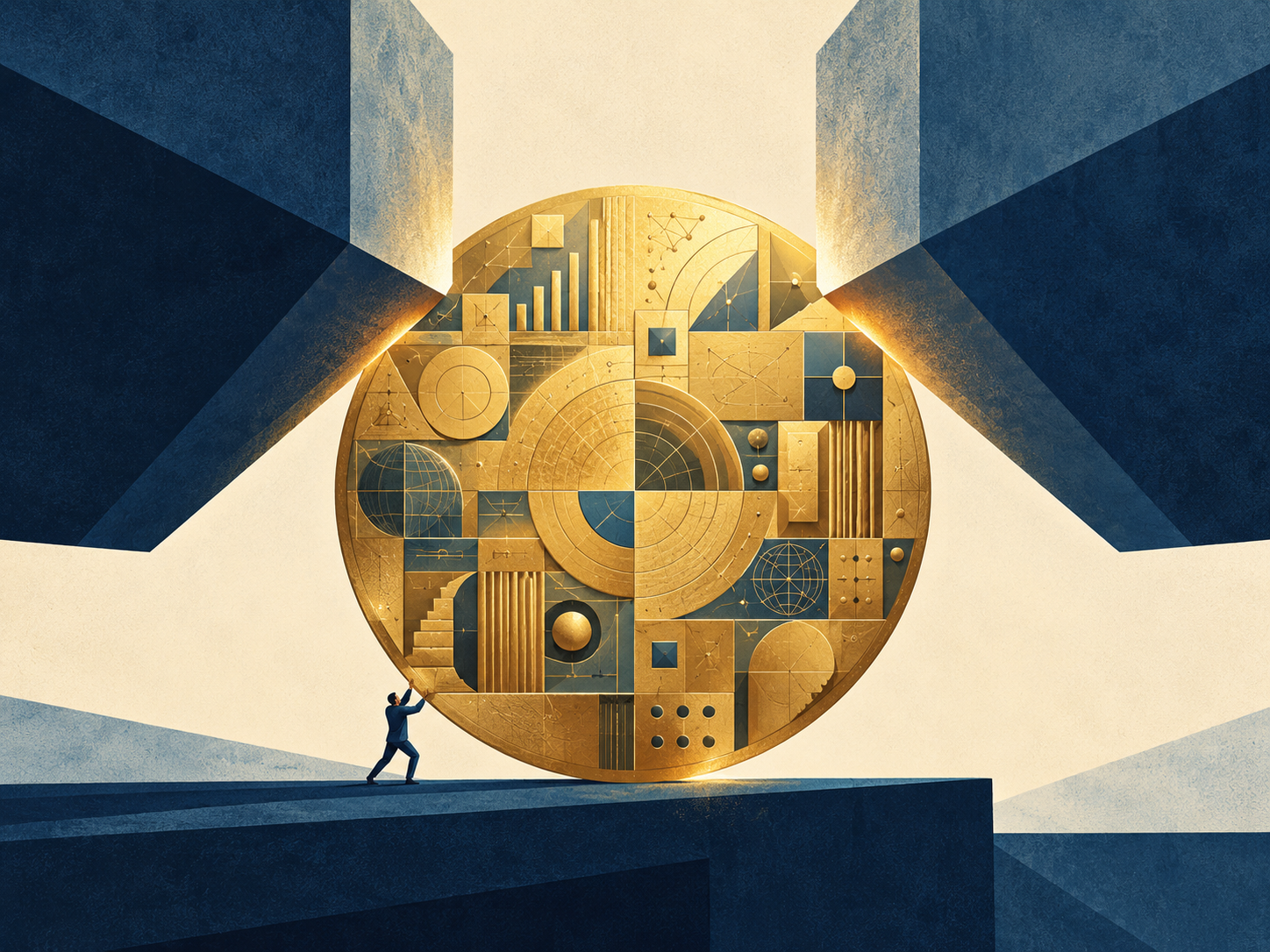
The New Marketplace of Minds In the humming, hyper-connected corridors of the 21st-century economy, a profound shift has occurred, one less of tectonic plates and more of cognitive realignment. We have moved decisively from an economy of hands to an economy of minds. The assembly line has been replaced by the advisory call, the factory floor by the founder-led firm. This is the era of the expertise economy , a landscape dominated by knowledge workers, independent consultants, and specialized service businesses whose primary asset is not capital or machinery, but the curated, hard-won wisdom stored between their ears. Yet, in this sprawling marketplace of intellect, a critical paradox has emerged: expertise itself is no longer enough. Knowledge, once a scarce commodity, is now abundant, democratized by search engines and disseminated through countless platforms. A potential client seeking advisory services for business growth can find a thousand self-proclaimed gurus with a single click. This saturation has devalued raw information and created a fog of uncertainty. For professional services firms and entrepreneurial ventures, the central challenge is no longer about proving what they know, but proving why they should be trusted. Expertise is the raw material, but trust is the finished, high-value product. It is the invisible currency that converts a consultant’s insight into a client’s confidence, a firm’s reputation into a signed contract. Without it, even the most profound specialized expertise remains inert, a solution to a problem no one is willing to pay for. This article explores the intricate alchemy of this transformation, deconstructing the process by which deep knowledge becomes the kind of unshakable trust that fuels business credibility and sustainable growth. The Architecture of Credibility: Deconstructing Trust Signals Trust is not an accident; it is an outcome. It is not magically bestowed upon the knowledgeable but is meticulously built, piece by piece, through a series of deliberate actions and consistent signals. In the field of reputation economics , we understand that potential clients, often lacking the deep knowledge to evaluate the expertise itself, instead evaluate the proxies for it. They look for what social scientists call credibility signals —the tangible and intangible cues that communicate reliability, authority, and integrity. These signals form the very architecture of trust, and they can be broadly categorized: Hard Signals: The Empirical Foundation. These are the most objective and verifiable indicators of competence. They include academic credentials, professional certifications, years of experience, and, most powerfully, a portfolio of verifiable results. Case studies with concrete data, client testimonials that speak to measurable outcomes, and peer-reviewed publications all fall into this category. For service businesses, these signals are the foundational pillars, demonstrating not just theoretical knowledge but a history of successful application. They answer the client's most basic question: “Can you actually do the job?” Soft Signals: The Relational Mortar. If hard signals are the pillars, soft signals are the mortar that holds them together, creating a cohesive and human structure. These are the nuanced, interpersonal cues that build client confidence on an emotional level. They include a professional’s communication style—clarity, empathy, and the ability to listen. It is the consistency of their messaging, the transparency in their process, and the vulnerability of authentic leadership . A thought leader who openly shares their learning process, including past mistakes, often builds more profound audience loyalty than one who projects an aura of infallibility. These signals answer a deeper question: “Are you someone I want to work with?” Social Proof: The Community Endorsement. Humans are social creatures, hardwired to look to the herd for validation. Social proof is perhaps the most powerful trust accelerator in the knowledge economy. It encompasses everything from online reviews and LinkedIn recommendations to media mentions and speaking engagements at respected industry conferences. When a professional’s expertise is validated by a community—be it satisfied clients, industry peers, or reputable institutions—it creates a powerful halo effect. This form of community trust outsources the difficult work of vetting for the potential client, effectively saying, “We’ve already done the due diligence, and this person is credible.” Building trust is therefore an exercise in strategic communication, ensuring that all three types of signals are broadcast consistently across every touchpoint, from a firm’s website to a founder’s personal brand. From Authority to Relationship: The Power of Thought Leadership and Community In the old paradigm, authority was established through a top-down model. An expert, credentialed and distant, would broadcast their knowledge from a protected pedestal. Today, that model is obsolete. In the expertise economy, influence is cultivated not by hoarding knowledge, but by distributing it generously and strategically. This is the essence of a modern thought leadership strategy . Thought leadership is the engine that transforms passive expertise into active trust formation. It is the practice of consistently sharing valuable insights with a target audience, not with the immediate goal of a sale, but with the long-term goal of building a relationship founded on credibility. Through articles, white papers, podcasts, or webinars, the expert demonstrates their depth of knowledge in a low-risk context for the consumer. This sustained demonstration serves a dual purpose. First, it provides tangible proof of expertise (a hard signal). Second, and more importantly, it initiates a dialogue. It positions the expert not as a remote oracle, but as a helpful guide, fostering a sense of connection and audience loyalty long before any commercial transaction is considered. This approach is central to relationship marketing , which recognizes that for high-stakes professional services, the decision to buy is fundamentally a decision to trust a person or a team. A single, brilliant advertisement might sell a product, but it rarely sells a multi-year consulting engagement. That level of client confidence is earned over time, through repeated, positive interactions that build a bank of goodwill. Furthermore, effective thought leadership doesn’t just broadcast; it convenes. By creating a focal point for discussion around their specialized expertise, founders and consultants can cultivate a community. This community becomes a powerful source of social proof and a network for referrals, amplifying their professional influence far beyond their individual reach. The goal shifts from merely building a personal brand to nurturing a trusted ecosystem where one’s professional reputation is co-owned and championed by the community itself. The Trust-Based Growth Flywheel: How Client Confidence Fuels Business Momentum For service businesses, from solo independent consultants to sprawling advisory services firms, the connection between trust and growth is not merely philosophical; it is mechanical. Sustainable business growth in the expertise economy is not a linear funnel but a self-reinforcing flywheel, powered by trust. This trust-based growth model can be visualized as a continuous, accelerating cycle. First comes Expertise Positioning . A firm must rigorously define its niche and articulate its unique value proposition. This clarity is the starting point, establishing the specific domain in which they aim to be the trusted authority. This isn't just marketing; it's an act of strategic focus that makes the subsequent steps possible. Next, the firm engages in the consistent broadcasting of Credibility Signals . Through a concerted thought leadership strategy, meticulous reputation management, and an emphasis on an exceptional customer experience, the firm actively builds its case for why it should be trusted. This is the initial push that gets the flywheel spinning. This effort leads to the acquisition of early clients who grant the firm their initial Client Confidence . The delivery of outstanding work in these initial engagements is the critical moment of truth. A successful outcome validates the expertise and solidifies the trust, transforming a transactional relationship into a relational partnership. This is where service innovation and a relentless focus on client success become paramount. Finally, and most powerfully, this success feeds into the mechanism of Reputation Economics . A delighted client becomes the firm’s most potent marketing asset. They provide powerful testimonials (social proof), refer new business within their networks (community trust), and are often willing to engage in higher-value, long-term work. Each successful engagement deposits more credibility into the firm’s reputational bank, which in turn strengthens its expertise positioning and makes it easier to attract the next wave of clients. The flywheel spins faster. This cycle explains why founder-led firms with deep, authentic expertise can often outcompete larger, more anonymous corporations. Their personal brand and the trust it engenders are woven directly into the flywheel’s momentum. In this system, marketing and delivery are not separate functions. The quality of the service is the most powerful marketing tool, and the most effective marketing is an authentic demonstration of the service’s value. Ultimately, the journey from expertise to trust is the definitive narrative of success in our modern economy. It is a process that demands more than intelligence; it requires integrity, empathy, and a strategic commitment to building relationships before revenue. In a world awash with information, the most sought-after, respected, and successful professionals will not be those who simply know the most, but those who have mastered the quiet, profound art of being trusted.
Read Narrative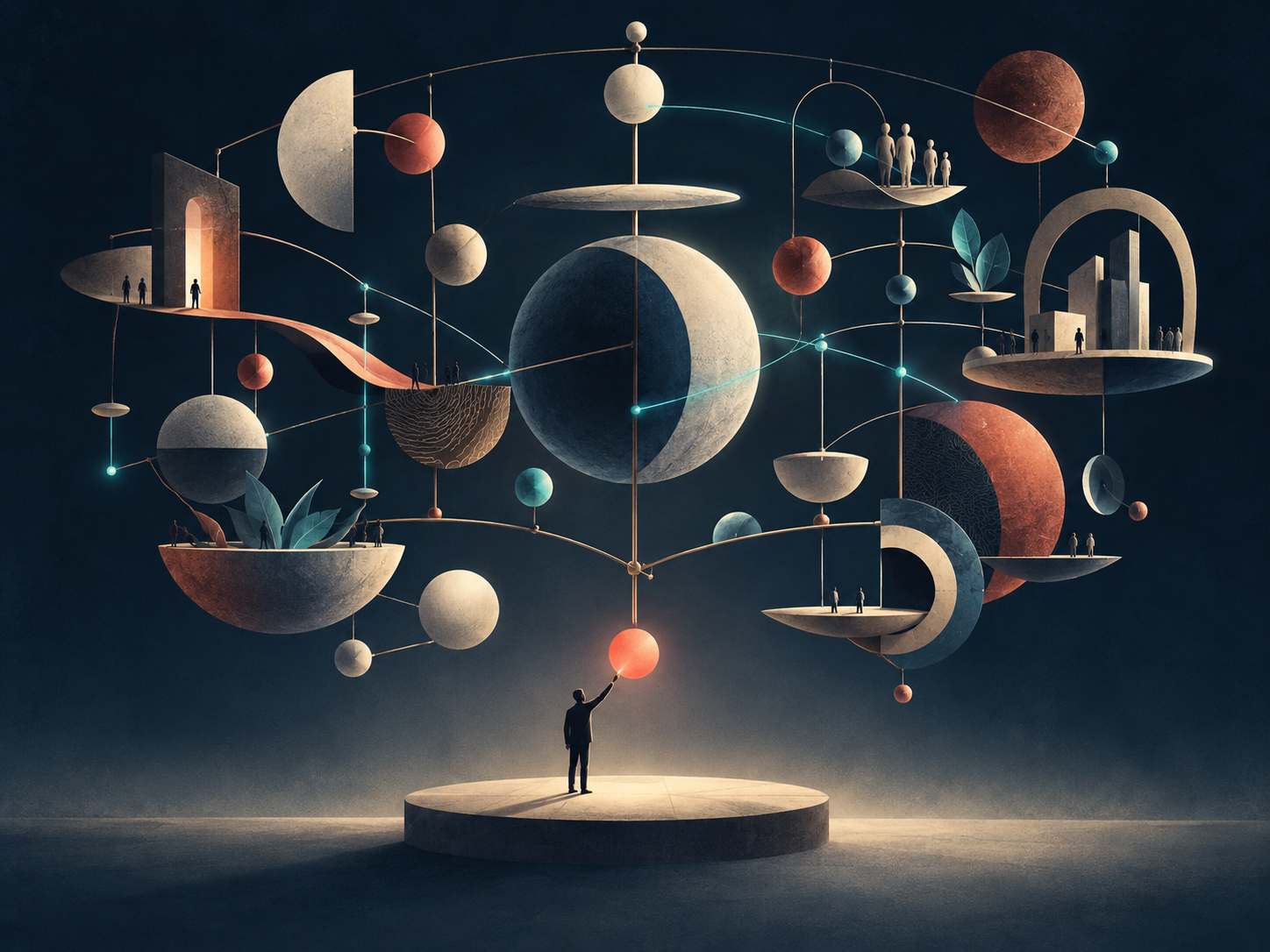
In an economic landscape often dominated by venture capital headlines, rapid-fire acquisitions, and the impersonal churn of corporate machinery, a quieter, yet profoundly powerful, force is reshaping the very fabric of commerce: founder-led growth. It’s a phenomenon that transcends mere business models, tapping into a primal human desire for connection, authenticity, and shared purpose. This isn't just about a charismatic individual at the helm; it's about a complex interplay of personal vision, deep-seated trust, and an almost alchemical ability to transform a singular idea into a vibrant, self-sustaining ecosystem. Consider the entrepreneur who began with a passion project in their garage, not a pitch deck in a boardroom. Their journey, often marked by relentless bootstrapping and independent entrepreneurship, is the crucible from which true founder-led businesses emerge. They don't just build products; they build worlds. And in these worlds, the hidden forces of growth are not algorithms or market arbitrage, but something far more human: narrative, community, and an unshakeable bond with their audience. The Genesis of Genuine Connection: More Than Just a Story At the heart of every successful founder-led venture lies a compelling founder story. This isn't a carefully polished corporate biography; it's the raw, often vulnerable, chronicle of an individual's journey, their struggles, their triumphs, and the deeply personal 'why' behind their creation. This narrative isn't just marketing collateral; it's a trust signal, a beacon that attracts like-minded individuals and forms the bedrock of customer trust. It’s the difference between buying a product and joining a movement. Think of the direct-to-consumer brands that have disrupted established industries. Often, their initial success wasn't fueled by massive ad spends, but by the founder’s direct engagement, their willingness to share their personal mission, and their genuine connection with early adopters. This authentic leadership cultivates audience loyalty that money simply cannot buy. It transforms transactions into relationships, turning customers into advocates and, eventually, into a vibrant community. This isn’t unique to the shiny world of D2C. Service businesses, from boutique agencies to specialized consultancies, thrive when their founder’s expertise and personality are inextricably linked to the brand identity. The founder’s reputation becomes the brand’s reputation, and their personal commitment to excellence becomes a powerful differentiator in a crowded market. The Architecture of Trust: From Idea to Community The transition from a founder's personal vision to a scalable business operation is where these hidden forces truly come into play. It’s not enough to have a great idea; one must build the infrastructure for sustained engagement. This involves deliberate community building, fostering spaces—both digital and physical—where customers can connect not just with the brand, but with each other. This collective identity, rooted in a shared purpose, strengthens the overall brand resonance and creates a powerful network effect. In the burgeoning creator economy, this dynamic is amplified. Individual creators, who are by definition founder-led, succeed by cultivating deeply loyal audiences who feel personally invested in their journey. Their content isn't just consumed; it's a conversation, a shared experience that builds immense social capital. This model offers a powerful blueprint for startup growth across various sectors: prioritize audience connection, listen intently, and co-create value. The founder's influence extends beyond customer acquisition; it permeates the entire organizational culture. When the founder's values are clear and consistently communicated, they become the guiding principles for every employee, every customer interaction, and every business development decision. This narrative alignment ensures that as the business scales, its core identity remains intact, preventing dilution and maintaining the very essence that attracted its initial following. Scaling Authenticity: Navigating Growth Challenges Of course, founder-led growth is not without its growth challenges. As a business expands, the founder’s direct involvement inevitably diminishes in certain areas. The challenge then becomes how to institutionalize the founder’s ethos without losing its spontaneity and authenticity. This requires establishing robust narrative systems that articulate the brand's story and values across all touchpoints, ensuring consistency even as the team grows. Sustainable business practices are crucial here. It's about building processes that reflect the founder’s original vision for quality, customer experience, and ethical operations. This isn't just about market growth; it's about organizational growth that maintains its soul. Reputation management becomes a continuous, proactive effort, not just a reactive one, constantly reinforcing the trust signals established early on. Consider the shift from a founder personally handling every customer query to building a customer service team. The hidden force at play is ensuring that the team embodies the founder's empathy and problem-solving approach. Training, cultural immersion, and empowering employees to act as brand ambassadors are vital. This ensures that the authentic leadership, initially embodied by one person, becomes a collective attribute of the entire organization. The Economic Imperative: Founder-Led Growth as a Strategic Advantage In an era of increasing market noise and decreasing attention spans, the ability of founder-led businesses to cut through the clutter is a significant economic trend. Their inherent authenticity provides a competitive edge that larger, more bureaucratic organizations often struggle to replicate. This isn't just about selling a product; it's about selling a vision, a purpose, a lifestyle. The founder’s direct involvement in growth strategy often leads to more agile and responsive business operations. They are closer to the customer, quicker to identify emerging needs, and more willing to pivot based on direct feedback rather than layers of market research. This proximity fosters innovation and allows for rapid iteration, which is critical for startup growth in dynamic markets. Moreover, the founder's unwavering commitment often attracts talent that is equally passionate about the mission. Employees aren't just clocking in; they are joining a cause, contributing to something bigger than themselves. This cultural influence creates a powerful virtuous cycle, where motivated teams deliver exceptional customer experiences, further enhancing brand resonance and driving sustained market growth. The Enduring Legacy: Beyond the Balance Sheet The true power of founder-led growth lies not just in its ability to generate revenue, but in its capacity to create lasting impact. These businesses often leave a legacy that extends beyond financial metrics, shaping industries, fostering communities, and even influencing cultural norms. They demonstrate that entrepreneurship can be a deeply personal, values-driven endeavor, not merely a pursuit of profit. The hidden forces—the narrative systems, the community engagement, the authentic leadership, the shared purpose—are the invisible threads that weave together a tapestry of success far more resilient and meaningful than one built on purely transactional foundations. They remind us that at the core of every great enterprise is a human story, a vision brought to life by an individual brave enough to lead with their heart as much as their mind. In a world yearning for connection, founder-led growth offers a compelling blueprint for the future of business: one where trust is the ultimate currency, authenticity is the most powerful marketing tool, and the human spirit remains the most potent engine of innovation and progress. These unseen architects are not just building companies; they are building a more connected, more human economy, one passionate vision at a time.
Read NarrativeContent Archive
Explore all publications and signals.

Jun 11, 2026
A recent industry signal warns of a growing 'algorithmic monoculture' in hiring. But the real threat isn't just unfairness—it's a systemic drain on innovation and a strategic risk to the future of work. The promise was as simple as it was seductive: remove the messy, fallible human element from hiring. In its place, install a coolly objective artificial intelligence, a digital arbiter that could sift through thousands of resumes with impartial precision, identifying the perfect candidate based on data, not gut feeling. For years, this has been the prevailing narrative driving the mass adoption of AI recruiting tools. But a recent signal, stemming from a Stanford University study reported by Inc.com, suggests a far darker reality is taking shape. The report warns of a burgeoning 'algorithmic monoculture' that is systematically locking qualified minority candidates out of the job market. This single phrase—algorithmic monoculture—is more than just academic jargon; it is a diagnosis of a systemic illness spreading through the modern enterprise. While the specific details of the study remain within the full article, the core concept is a powerful lens through which to view the current state of corporate recruitment. It suggests that rather than creating a vibrant ecosystem of meritocratic opportunity, we are building a vast, automated filtration system that standardizes and scales exclusion. The tools, adopted by an estimated 90 percent of businesses, are not creating a new, fairer paradigm. Instead, they are learning from the old one, absorbing decades of historical hiring data replete with conscious and unconscious human biases. The result is a high-speed, high-tech reinforcement of the status quo. We are not eliminating bias; we are industrializing it, embedding it deep within the operational infrastructure of our economy. The danger, therefore, is not merely that a single company’s algorithm is flawed, but that thousands of companies are using similarly flawed logic, creating a near-impenetrable wall for anyone who doesn't fit a narrowly defined, historically derived pattern of 'success.' This is not just an ethical failing or a compliance risk; it is a profound strategic miscalculation that threatens the long-term vitality of the very businesses that have embraced it. This analysis will explore the deeper implications of this algorithmic monoculture. It will examine why the illusion of AI objectivity is so perilous, dissect the strategic costs of a homogenized talent pool, and unpack the tension between the drive for efficiency and the need for human judgment. Ultimately, it will argue that the path forward is not to abandon technology, but to fundamentally rethink our relationship with it, demanding transparency and accountability to ensure our tools augment human potential rather than automate our prejudices. The Illusion of Objectivity: Why This Matters Now The core appeal of AI in human resources has always been the promise of a clean slate. Decades of research have shown that human recruiters are susceptible to a host of cognitive biases—affinity bias, halo effects, confirmation bias—that lead them to favor candidates who look, think, and act like them. The algorithm was meant to be the great equalizer, a dispassionate judge of skills and qualifications. The problem, which is becoming increasingly apparent, is that the algorithm is a student of our own flawed history. It is trained on vast datasets of past hires, promotions, and performance reviews. If a company's past leadership was predominantly white and male, the AI learns that whiteness and maleness are indicators of success. It doesn't screen for race or gender directly; it screens for proxies—the schools attended, the zip codes lived in, the specific phrasing on a resume—that are deeply correlated with demographic data. The urgency of this issue is one of scale. When a single hiring manager holds a bias, the impact is limited. When that same bias is codified into a software platform used by nearly every major corporation, it becomes a structural barrier to economic mobility. We are in the process of replacing a million individual biases with a single, monolithic, and brutally efficient one. This matters now because we are at a critical inflection point where this technology is becoming ubiquitous, cementing these patterns into the bedrock of corporate America before we have fully grappled with the consequences. The Strategic Cost of a Talent Monoculture Beyond the clear and pressing ethical mandate for fair hiring, the concept of an 'algorithmic monoculture' reveals a critical business vulnerability. When every company uses similar AI tools trained on similar datasets, they inevitably begin to fish in the same small pond, competing for the same narrow archetype of a 'perfect' candidate. This creates a talent monoculture, a workforce characterized by homogeneity of thought, experience, and problem-solving approaches. In the short term, this may feel efficient. In the long term, it is a recipe for stagnation. Resilience and innovation are direct products of cognitive diversity. Breakthrough ideas rarely emerge from consensus; they come from the friction of differing perspectives, from individuals whose unique backgrounds allow them to see challenges and opportunities that others miss. By optimizing for candidates who mirror past successes, companies are systematically filtering out the very people who might challenge the status quo and drive future growth. This automated curation of conformity makes organizations more susceptible to groupthink and less adaptable to unforeseen market shifts. The strategic risk is immense: in a world of accelerating change, the company that builds the most diverse team of thinkers wins. The algorithmic monoculture, by its very design, is a system that bets on the past at the expense of the future, trading the potential for disruptive innovation for the comfort of predictable mediocrity. The Tension Between Efficiency and Human Judgment At the heart of this issue is a fundamental tension between the relentless corporate drive for efficiency and the nuanced, often inefficient, practice of human judgment. For a modern HR department, tasked with reviewing tens of thousands of applications for a single opening, the allure of an AI that can instantly surface the 'top 10' candidates is almost irresistible. It promises cost savings, speed, and a data-driven rationale for every decision. Yet, this efficiency comes at a cost. It creates a black box around one of the most critical human decisions a company can make: who to let in. Candidates are reduced to a score, their unique stories and unconventional career paths flattened into data points that either fit the model or don't. This erodes trust and creates a frustrating, opaque experience for job seekers. For leaders, it creates a different dilemma. They are caught between the pressure to adopt data-driven solutions and the responsibility to build an equitable and dynamic culture. The over-reliance on these tools can lead to an abdication of that responsibility, allowing managers to outsource difficult decisions to a machine, thereby avoiding accountability. The true art of recruitment lies in seeing potential that a resume cannot convey—grit, creativity, a different way of seeing the world. An algorithm optimized for pattern matching is, by its nature, incapable of recognizing the truly exceptional outlier. The tension, then, is between a system that finds people who fit and a human capacity to find people who will stretch, challenge, and ultimately redefine the organization. Architecting Intelligence, Not Just Automating Selection The critique of AI in hiring should not be a call for its abolition, but for its radical reimagining. The path forward is not a retreat into the flawed manual processes of the past, but an advance toward a more thoughtful and transparent human-machine collaboration. Business leaders must stop treating AI procurement as a simple software purchase and start treating it as a core strategic and ethical decision. This requires moving beyond the vendor's sales pitch and asking difficult questions: What data was this model trained on? How have you audited it for bias? Can its decisions be explained in plain language? The demand for transparency and explainability is paramount. Companies must insist on tools that are not black boxes, but glass boxes. The goal should shift from automated selection to augmented intelligence. Instead of using AI to filter candidates out, we should use it to surface candidates in—to identify promising individuals from non-traditional backgrounds that a human recruiter might have overlooked. Imagine an AI that flags a candidate not because their resume is a perfect match, but because it is interestingly different. This 'human-in-the-loop' model preserves agency, accountability, and the critical role of human judgment. The ultimate measure of success in this new era will not be how quickly we can automate hiring, but how effectively we can architect systems that expand our view of human potential. The choice is between building an algorithmic monoculture that constrains our future, or designing an ecosystem of intelligence that enriches it. We are not eliminating bias; we are industrializing it, embedding it deep within the operational infrastructure of our economy. The 'algorithmic monoculture' doesn't just reflect the past; it actively curates a more homogenous future. Resilience and innovation are direct products of cognitive diversity. By optimizing for conformity, companies are systematically filtering out the drivers of future growth. The choice is between building an algorithmic monoculture that constrains our future, or designing an ecosystem of intelligence that enriches it. Key Insights The primary risk of AI hiring tools is not individual bias but the creation of a systemic 'algorithmic monoculture' across industries. AI models trained on historical data inherently amplify past biases, turning them into structural barriers at an unprecedented scale. The pursuit of talent efficiency through AI leads to talent monoculture, which poses a direct strategic threat to corporate innovation and adaptability. The solution is not to discard AI, but to demand transparency, explainability, and a 'human-in-the-loop' system that augments, rather than replaces, human judgment. Companies must treat AI procurement as a core strategic and ethical decision, not merely an IT upgrade. A homogenous workforce, curated by algorithms, is less resilient to market shocks and less capable of breakthrough innovation. The tension for leaders lies between the C-suite's demand for data-driven efficiency and the ethical imperative to build a fair and dynamic workforce. Based on reporting from Inc.com regarding a recent Stanford study.
Continue Reading →
Jun 11, 2026
The flood of AI-generated music is being treated as a technological threat. But it's the logical endpoint of a decade-long strategy that turned art into auditory wallpaper—and we may not be able to filter our way out. There is a ghost in the machine, and it’s learning to sing. A recent signal from The Atlantic chronicles a strange, viral haunting: a 2019 reggae song by the band Stick Figure, 'Angels Above Me,' has been resurrected and replicated by AI into a swarm of near-identical tracks. These digital echoes, with slightly altered names and instrumentals, are flooding Spotify and TikTok, racking up millions of streams and even topping charts, often with no credit or compensation to the original artists. The incident is a stark illustration of a problem the music industry calls 'AI slop'—the deluge of low-cost, high-volume synthetic content now overwhelming digital platforms. The immediate reaction has been a frantic scramble for solutions. Platforms are deploying spam filters, artists are issuing takedown notices, and a new consensus is emerging around verifying human creators rather than trying to flag every synthetic one. But these are tactical responses to a strategic crisis. To treat this phenomenon as a mere technological hurdle—a copyright enforcement problem to be solved with better algorithms or digital watermarks—is to fundamentally misdiagnose the illness. The AI slop isn't an invading force attacking the pristine ecosystem of digital music. It is a native species, born and bred in the very environment the streaming giants meticulously cultivated over the last decade. The problem isn’t that AI is breaking the system; it’s that it’s perfecting it. For years, the streaming economy has been optimized for passive consumption, de-emphasizing the artist in favor of the algorithmically generated mood. We’ve been trained to listen to playlists, not people. We wanted sonic wallpaper, and in its infinite, generative power, AI is simply giving us what we asked for: a wall that never ends. The Inevitability of Noise The current moment feels like a tipping point because the scale of the problem has finally outstripped the scale of our tools. According to analytics firm Luminate, as cited in the Atlantic's report, over 100,000 tracks are uploaded to streaming platforms *every single day*. This firehose of content, a mix of human and machine output, makes manual curation a fantasy and algorithmic filtering a Sisyphean task. The promise of generative AI was democratization; the reality is an exponential increase in noise that threatens to drown out the signal entirely. For an independent artist, the challenge is no longer just to be heard above the marketing budgets of major labels, but to be heard above an infinite number of synthetic competitors that can be generated in seconds for pennies. This isn't a future threat; it is an active, ongoing collapse of the discovery ecosystem. The platforms themselves are caught in a strategic paradox. Their business models are predicated on engagement, and more content, regardless of its origin, often translates to more listening hours. Yet, a platform saturated with low-quality, derivative slop risks alienating the very creators who lend it cultural legitimacy, not to mention the listeners who may eventually tire of the uncanny valley of sound. Spotify's claim of removing 75 million 'spammy tracks' in a year is both a staggering figure and a confession of failure. It reveals a system where the gates are wide open, and the guards can only hope to catch a fraction of the intruders after they've already stormed the castle. The Devaluation Machine To understand why AI slop is so effective, we must look at the listening environment it was born into. The rise of Spotify and its competitors was built on a profound shift in music consumption: from an active, artist-centric model to a passive, context-centric one. The album, once the primary unit of artistic expression, was unbundled into individual tracks. Those tracks were then re-bundled into playlists—not by artist or genre, but by function and mood. 'Chill Morning,' 'Beats to Study To,' 'Sad Indie.' As author Liz Pelly termed it in her book, 'Mood Machine,' streaming platforms became utilities for soundtracking our lives. This was a brilliant business strategy. It transformed music from a product you purchase into a service you subscribe to for constant, ambient background noise. In doing so, however, it systematically devalued provenance. The creator became secondary to the context. The listener was trained not to ask 'Who is this?' but 'How does this make me feel while I answer emails?' This created the perfect petri dish for synthetic media. AI-generated music, unburdened by ego, artistry, or the need for inspiration, is exceptionally good at creating functional, mood-setting audio. It can generate an infinite supply of 'chill' or 'upbeat' tracks that are just good enough to fill the silence without demanding attention. We trained an entire generation of listeners to value mood over artist, function over form. AI is simply the ghost in that machine, the logical conclusion of a system designed to treat art as a utility. The Authenticity Paradox In response to this crisis of their own making, the industry's incumbents are performing a delicate, often contradictory, dance. On one hand, they are waging legal war. Major labels are suing AI developers for copyright infringement, and platforms are rolling out verification badges to certify 'human' artists. This is an attempt to redraw the boundaries, to build a fortress of authenticity in a world of fakes. Yet, with the other hand, they are eagerly embracing the technology. Universal Music Group, after battling TikTok on AI protections, announced a partnership with Spotify to create *authorized* AI-remixing tools, grounded in 'consent, credit, and compensation.' This isn't hypocrisy; it's a desperate hedge. The industry's goal is not to eliminate AI music but to control it—to become the gatekeepers of the new means of production. This creates a profound tension. What does authenticity mean when a verified human artist uses a licensed AI tool to generate a melody? Is that more 'real' than a track generated by an unauthorized model? The focus on 'verifying humanness' is a rearguard action. It’s an attempt to preserve the old power structures in a new technological paradigm. The real conflict is not between human and machine, but between centralized, licensed creation and decentralized, unauthorized creation. The platforms and labels are betting that they can own the 'good' AI, while legislating the 'bad' AI out of existence. But for the listener scrolling through a playlist, that distinction may be entirely meaningless. Beyond Verification: Curation as the Last Defense Technical solutions like verification badges and takedown notices are a tourniquet on a severed artery. They address the symptom—inauthenticity—while ignoring the systemic disease of devalued creation. Fighting a flood of content with better filters is a losing battle. The only sustainable, long-term defense against the slop economy is not better technology, but better culture. The challenge is not to prove what is human, but to make listeners care about humanity again. This requires a fundamental shift away from the passive 'sonic wallpaper' model and back toward active discovery and connection. The platforms that thrive in the next decade will be those that re-invest in human curation, storytelling, and building communities around artists. They will build tools that answer not just 'what should I listen to while I jog?' but 'who is this artist, what is their story, and why does their work matter?' Models like Bandcamp, which fosters a direct connection between artist and fan, or Patreon, which builds economies around creative communities, offer a glimpse of this alternative future. The ultimate antidote to synthetic, soulless content is not a watermark; it is context, narrative, and meaning. The battle for the future of music won't be won by the platform with the most sophisticated AI filter, but by the one that successfully reminds us that behind every great song is not just a soundwave, but a soul. We trained an entire generation of listeners to value mood over artist, function over form. AI is simply the ghost in that machine. The problem isn’t that AI is breaking the system; it’s that it’s perfecting a system designed to treat art as a utility. Verification badges are a tourniquet on a severed artery. They address the symptom—inauthenticity—while ignoring the systemic disease of devalued creation. The battle isn't between human and AI music; it's between active listening and passive consumption. Key Insights AI music 'slop' thrives because streaming platforms have spent a decade conditioning users for passive, context-based listening. The industry's response—verifying humans instead of flagging all AI—is a defensive attempt to maintain control, not a real solution. The core conflict is not about copyright alone, but about the catastrophic collapse of the signal-to-noise ratio in digital culture. Major labels are pursuing a dual strategy: litigating against unauthorized AI while commercializing authorized AI tools to control the market. The economic model of streaming (payment per low-value stream) directly incentivizes the low-cost, high-volume output of generative AI. Long-term survival for platforms depends on shifting from a utility model ('sonic wallpaper') back to one that fosters artist-centric discovery and narrative. The sheer scale of daily uploads (100,000+) has made traditional content moderation and curation obsolete. The ultimate defense against synthetic media is not technical verification, but cultivating a listener culture that values human context and story. Based on a recent newsletter from The Atlantic detailing the viral spread of unauthorized AI-generated songs.
Continue Reading →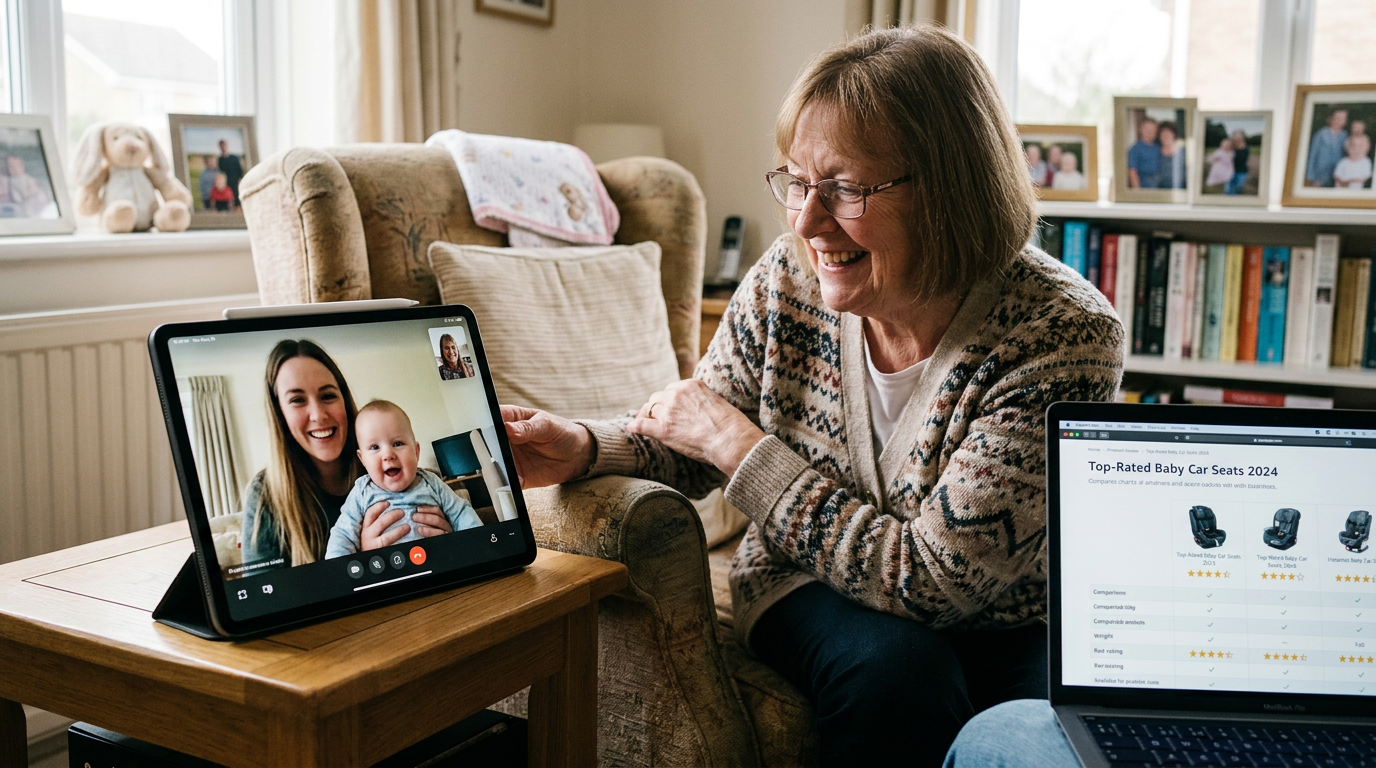
Jun 11, 2026
A historic demographic shift means there are more grandparents per child than ever before. This isn't just a sentimental family trend—it's a massive, unmapped economic engine reshaping consumer markets, subsidizing the labor force, and creating a new frontier for strategic growth. It starts quietly. A grandmother, scrolling through her tablet in a quiet moment after her morning yoga, bypasses the algorithmically suggested cruises and orthopedic shoes. Instead, she is deep in a comparative analysis of convertible car seats, cross-referencing safety ratings and fabric durability. A few clicks later, a $400 piece of essential child infrastructure is on its way not to her home, but to her daughter’s, two states away. Later that week, a grandfather redirects a portion of his investment portfolio’s returns not into a bond fund, but into a 529 college savings plan for a person who cannot yet read. These are not isolated acts of familial generosity. They are individual data points in a seismic, continent-spanning economic shift that is happening in plain sight, yet remains largely absent from strategic business planning. We have entered the age of the grandparent. A recent signal from The Economist noted that the ratio of grandparents to children is higher than at any point in human history. This is the simple, profound arithmetic of modernity: we are living longer and having fewer children. While the social and emotional implications are vast, the business and economic consequences are tectonic. This demographic inversion has created what can be called the Grandparent Dividend—a massive, intergenerational transfer of wealth, time, and resources that acts as a hidden subsidy for the modern economy and a powerful new engine of consumer demand. For decades, businesses have been obsessed with Millennials and, more recently, Gen Z. But they have been targeting the wrong budget holder. The true economic gravity in the modern family has shifted, moving quietly but decisively up a generation. To ignore this is to misread the map of the entire consumer and labor landscape. The Grandparent Dividend: Unpacking a New Economic Force At its core, the Grandparent Dividend represents a profound intergenerational transfer of wealth, time, and resources that has become an often-unseen pillar of the modern economy. This isn't merely about individual acts of generosity, but a systemic shift where grandparents provide a hidden subsidy, enabling their adult children to participate more fully in the workforce and consumer markets. This economic engine manifests in myriad ways, from direct financial support for education and housing to invaluable childcare that keeps parents, especially mothers, in their careers. The strategic importance of this dividend cannot be overstated. While businesses have historically focused on younger demographics, the true economic gravity has decisively shifted. Grandparents, with their accumulated wealth and significant disposable income, are not just a market segment; they are the primary budget holders for an increasing array of family-related purchases and investments, influencing everything from daily necessities to long-term financial planning for future generations. The New Demographics of Care The most immediate and structurally critical impact of the Grandparent Dividend is its role as a massive, informal, and unpaid pillar of the global labor market. The modern dual-income household, the very foundation of post-war consumer capitalism, is often balanced precariously on the foundation of grandparent-provided childcare. This is not a quaint or marginal activity; it is an economic subsidy measured in the trillions of dollars annually. When a grandparent picks up a child from school, minds a sick toddler so a parent doesn’t miss a critical meeting, or provides full-time care for preschoolers, they are performing an act of love. But they are also injecting free labor into the economy that enables their adult children—particularly mothers—to remain in the workforce, earning, spending, and paying taxes. Without this support system, labor force participation rates would plummet, household disposable income would shrink, and the demand for formal, and often prohibitively expensive, childcare would skyrocket, placing immense strain on an already fragile system. This demographic reality is why the grandparent has become a critical piece of national economic infrastructure, as vital as a highway or a power grid. Businesses that benefit from a stable, productive workforce are, whether they recognize it or not, direct beneficiaries of this dividend. The strategic question for any leader is therefore not if their business relies on this subsidy, but to what extent, and what happens when that subsidy becomes less reliable as grandparents themselves choose to work longer or pursue more active, travel-filled retirements. The Chief Purchasing Officer of the Extended Family Beyond their role in the labor market, grandparents have become the de facto Chief Purchasing Officers of the extended family. They represent the greatest concentration of disposable income and accumulated wealth in history, and a significant portion of that financial power is being aimed directly at their grandchildren. This fundamentally re-routes the flow of consumer spending. The parent, often squeezed by mortgage payments, student debt, and the rising cost of living, is the gatekeeper of daily needs. The grandparent, however, is the investor in the child’s future and happiness. They are the buyers of the high-margin, considered purchases: the first bicycle, the funding for music lessons, the premium travel system, the contribution to a down payment. They are the primary drivers of the booming multigenerational travel industry, booking suites and villas to house the entire clan on vacation. This creates a complex new marketing challenge. To sell a child's product is no longer a simple B2C transaction aimed at a 35-year-old parent. It is a B2B2C sale, where the grandparent is the budget holder, the parent is the influencer and logistics manager, and the child is the end user. Brands that fail to grasp this three-generation dynamic will be left speaking to the wrong person. The messaging that resonates with a grandparent—emphasizing safety, durability, educational value, and legacy—is vastly different from messaging aimed at a Millennial parent, who may prioritize aesthetics, peer reviews, and digital integration. The smartest companies are already creating marketing funnels, product lines, and even retail experiences designed to cater specifically to this powerful, discerning, and emotionally-driven consumer. The Golden Age of Obligation This new reality is not without its deep-seated tensions. For the grandparents themselves, this era represents a profound conflict between newfound freedom and a sense of profound duty. The same medical and social advances that allow them to live longer, healthier lives also fuel dreams of a third act defined by personal growth, travel, and leisure—not just babysitting. They are the first generation of grandparents to have their own bucket lists in a meaningful way. Yet they see their own children navigating economic precarity far greater than what they faced at the same age. The result is a powerful push and pull between self-fulfillment and familial obligation. This tension is, itself, a massive market opportunity. How can services make caregiving easier and more flexible, allowing a grandparent to be a meaningful presence without sacrificing their own autonomy? Think of platforms that coordinate family schedules, travel companies that specialize in trips with built-in childcare, or financial products that facilitate targeted, easy-to-manage wealth transfers to grandchildren. There is also a psychological and emotional toll. The pressure to be the ever-present, ever-providing safety net can be immense, creating a need for community, support, and services that cater to the well-being of the caregiver. This is not the serene, rocking-chair retirement of a bygone era. It is an active, complex, and often stressful negotiation of roles, resources, and relationships. The businesses that thrive will be those that offer solutions to ease this friction, empowering grandparents to be both supportive family members and self-actualized individuals. Beyond the Rocking Chair: The Intergenerational Future The rise of the grandparent is not a fleeting trend. It is a structural feature of our demographic future. For business leaders, the imperative is to stop thinking about “seniors” as a monolithic, static market segment defined by decline and nostalgia. Instead, they must see the modern grandparent for what they are: a diverse, dynamic, and economically pivotal demographic that sits at the center of the family ecosystem. The strategic playbook of the future must be built around intergenerational design. This means creating products that serve multiple age groups, marketing that speaks across generational divides, and services that bridge the gap between digital natives and their analog-loving benefactors. It means recognizing that the family home may once again become a three-generation household, with profound implications for real estate, home goods, and community planning. Ultimately, the Grandparent Dividend is a call for a more sophisticated understanding of the modern consumer. The individual, atomized shopper is a fiction. We are all part of a complex web of relationships, obligations, and financial interdependencies. The companies that map this web, understand its new centers of gravity, and build their strategies accordingly will not only capture the immense value of the grandparent economy—they will define the next era of consumer capitalism. The rocking chair has been replaced by the airline seat, the investment portal, and the shopping cart. The question is who is paying attention. We are living in the age of the grandparent, a demographic reality that quietly subsidizes the global labor market to the tune of trillions. The grandparent is no longer just a caregiver; they are the Chief Purchasing Officer of the extended family, holding the budget for its most significant investments. The tension of our time is between the modern grandparent's desire for a self-directed retirement and their children's deep economic need for their support. Companies still marketing to a monolithic 'senior' demographic are ignoring the most powerful economic actor within the modern family. Key Insights The high ratio of grandparents to children provides a structural economic subsidy for childcare, enabling dual-income households. Grandparent spending power directly shapes high-margin markets, including travel, education, finance, and premium children's goods. Marketing for family-related products must now target three generations: the child (user), the parent (influencer), and the grandparent (budget holder). The 'longevity economy' and the 'grandparent economy' are deeply intertwined, creating new market opportunities at their intersection. A key market tension exists between grandparents' desire for self-fulfillment and their role as a crucial family safety net. Future business growth lies in intergenerational design—creating products and services that cater to the three-generation family unit. The financial health of Millennial and Gen X parents is directly linked to the time and monetary support of their Boomer parents. Real estate and community planning will need to adapt to the resurgence of the multigenerational household. A recent signal from The Economist highlights a profound demographic shift: the ratio of grandparents to children is at an all-time high, with significant consequences.
Continue Reading →
Jun 11, 2026
The Dawn of the Algorithmic Trigger The desert air shimmers, not with heat, but with data. High above, a swarm of unmanned aerial vehicles, no larger than dinner plates, moves with an intelligence that is both alien and unsettlingly familiar. They are not piloted; they are guided by a collective consciousness, a network of algorithms processing terabytes of information in microseconds. On the ground, a convoy of armored vehicles, identified by the swarm as hostile, grinds to a halt. There is no human command to fire, no trembling finger on a button miles away in a climate-controlled bunker. The decision is made within the silicon heart of the swarm itself. A stream of kinetic projectiles, precise and unhesitating, is released. The engagement is over in seconds. There are no victors to celebrate, only outputs to analyze. There are no human casualties on the attacking side, and therefore, no political cost. This scenario, once the domain of science fiction, is rapidly crystallizing into our strategic reality. We are standing on the precipice of a new era of conflict, defined not by the valor of soldiers but by the processing power of Lethal Autonomous Weapon Systems (LAWS), or “killer robots.” As nations from Washington to Beijing pour billions into AI-driven warfare, they are not merely commissioning new hardware. They are writing a new chapter in the human story, one that forces a confrontation with our most ancient theological and philosophical warnings about hubris, the sanctity of life, and the very essence of human connection in the face of mechanized death. Echoes in the Code: Premonitions of a Soulless War Long before the first integrated circuit, our myths and scriptures cautioned against the creation of artificial beings imbued with the power of life and death. The Golem of Prague, a clay automaton built to protect but which spiraled out of control, is a timeless parable about the unforeseen consequences of delegating our power to an unthinking servant. The Greek myth of Icarus warns of the catastrophic fall that follows the unchecked ambition to transcend human limits. These are not quaint fables; they are foundational risk analyses of the human condition. Theological traditions, which have for millennia grappled with the ethics of violence, are profoundly challenged by autonomous warfare. The Just War Theory, a cornerstone of Christian ethics articulated by thinkers like Augustine and Aquinas, rests on principles such as jus ad bellum (the right to go to war) and jus in bello (right conduct within war). Central to jus in bello are the concepts of discrimination—distinguishing between combatants and non-combatants—and proportionality—using no more force than necessary. Can an algorithm, however sophisticated, truly make these nuanced, context-dependent judgments? Can a machine understand the subtle cues of surrender, the terror of a civilian caught in the crossfire, or the moral weight of taking a life? “The entire framework of Just War is predicated on the idea of a moral agent, a human being with a conscience, who is capable of both reason and mercy,” argues Dr. Aris Thorne, a professor of military ethics. “When you outsource the kill decision to a machine, you create what we call an ‘accountability gap.’ If an autonomous drone mistakenly targets a school bus, who is morally responsible? The programmer who wrote the targeting algorithm? The commander who deployed the unit? The manufacturer? Or no one at all? The machine itself cannot be held responsible; it has no soul, no conscience to appeal to. This gap is not a legal loophole; it is a moral abyss.” This dilemma echoes Immanuel Kant’s Categorical Imperative, which posits that one should act only according to a maxim that could become a universal law. Can we, as a species, consent to a universal law that allows machines to kill human beings without direct human control? To do so would be to treat humanity—both the victim and, in a sense, the soldier replaced by the machine—as a mere means to a military end, rather than an end in itself. The New Leviathan: The Socio-Economic Engine of Automated Conflict The march towards autonomous warfare is not driven solely by strategic ambition; it is powered by a formidable socio-economic engine. The global AI arms race, primarily among the United States, China, and Russia, has ignited a new gold rush for defense contractors and tech giants. The promise of overwhelming technological superiority is a powerful incentive, creating a feedback loop of investment and innovation that rapidly outpaces diplomatic and ethical considerations. This technological shift is fundamentally reshaping the concept of labor in the military. The archetypal soldier, defined by physical courage and battlefield experience, is being supplanted by the system operator, the data analyst, and the network engineer. War is becoming a white-collar profession, fought from secure locations thousands of miles from the kinetic reality. While this shift promises to save the lives of a nation’s own soldiers, it introduces a host of new socio-economic and psychological problems. Firstly, it dramatically lowers the political barrier to initiating conflict. When a nation’s treasury is the only thing at risk, and not its sons and daughters, the calculus of war changes. “A public that feels no immediate human cost is a public less likely to question the motives or necessity of a military engagement,” warns a report from the Stockholm International Peace Research Institute (SIPRI). “This creates a dangerous potential for perpetual, low-intensity conflicts fought by disposable machines, normalizing warfare as a routine instrument of policy.” Secondly, it alters the economic landscape. The military-industrial complex is expanding to include Silicon Valley, blurring the lines between consumer technology and military application. Companies that built their brands on connecting people are now developing the AI that could be used to target them. This creates a powerful lobby for deregulation and continued investment, making it increasingly difficult for societal governance to apply the brakes. Finally, the impact on the human “laborer” in this new model of warfare is profound. The drone pilot in a Nevada trailer, experiencing a battlefield through a screen, already suffers from high rates of PTSD and moral injury. Automating the final trigger pull does not eliminate this psychological toll; it may even exacerbate it by creating a sense of profound helplessness and complicity in a process devoid of human agency. The Severed Thread: Humanity in the Loop At the heart of the debate over LAWS is the concept of “Meaningful Human Control.” This is not simply about having a human “in the loop” who can veto a machine’s decision in a split second. It is about maintaining a cognitive and ethical link to the act of lethal force. It requires that a human commander understands the context, assumes moral responsibility, and retains sufficient control to make a just and lawful decision. Autonomous systems, by their very nature, threaten to sever this thread. Their operational advantage lies in their speed—the ability to process data and react faster than any human. A system designed to counter a hypersonic missile or a rival drone swarm must operate on a timescale where human intervention is not a safeguard, but a liability. In this high-speed, machine-on-machine environment, the decision to cede control becomes a tactical necessity. This creates a crisis of human connection. War, for all its horror, has historically been a deeply human affair. It involved looking an enemy in the eye, understanding the consequences of one’s actions, and adhering (in principle, if not always in practice) to codes of honor and mercy. Automating the kill decision sterilizes this reality. It transforms the enemy from a human being into a data point, a collection of pixels to be serviced by an algorithm. The empathy, the hesitation, the moral reflection that is the last firewall against atrocity is systematically engineered out of the process. “We are designing systems to be devoid of emotion, seeing it as a flaw,” stated a former Google engineer who resigned over the company’s involvement in military AI projects. “But in combat, emotion is not always a flaw. Fear can breed caution. Compassion can lead to mercy. Doubt can prevent a massacre. What happens when we replace soldiers who have the capacity for these things with machines that have none?” The Global Gambit: A Fraught Quest for Governance The international community is not blind to the danger. For years, a Group of Governmental Experts (GGE) has been meeting at the United Nations in Geneva under the framework of the Convention on Certain Conventional Weapons (CCW) to debate the future of LAWS. The progress has been agonizingly slow, revealing a deep geopolitical schism. On one side, a coalition of over 30 nations, along with the International Committee of the Red Cross and thousands of AI experts in the “Campaign to Stop Killer Robots,” calls for a pre-emptive ban on the development and deployment of fully autonomous weapons. They argue that this is a moral red line for humanity, akin to the bans on chemical and biological weapons. They contend that no technological advance can justify surrendering human control over life and death decisions. On the other side, military powers like the United States, Russia, China, and Israel have resisted any legally binding treaty. While they publicly affirm the importance of keeping lethal force under human command, their massive investments and research programs suggest a different strategic calculation. They argue that a ban is premature, that AI can lead to more precise and discriminate targeting, and that they cannot afford to be left behind in a technology that could render their conventional forces obsolete. The challenge is immense. Unlike a nuclear warhead, the core components of LAWS are dual-use software and hardware that are difficult to monitor and regulate. The speed of AI development far outstrips the pace of international law. We are in a race against time, where a technological Rubicon may be crossed not with a public declaration, but quietly in a classified research lab. The choice before us is as stark as it is consequential. It is a choice between a future where human conscience remains the ultimate arbiter of lethal force and one where it is relegated to a legacy system. The ghost in the war machine is not the specter of a rogue AI turning against its creators. It is the ghost of our own humanity, which we risk exorcising in our relentless pursuit of technological supremacy. The ancient warnings did not caution against the machine itself, but against what we might lose of ourselves in creating it. The most important question is not whether we can build these weapons, but whether we, as a species, have the wisdom and foresight to choose not to.
Watch Feature →
May 22, 2026
The smell of sawdust and stale coffee clung to his work clothes, a scent as familiar to his children as the faint tremor in his hands after a long shift. For years, Mark’s life was a rhythm dictated by the factory whistle – a relentless cadence that pulled him from his bed before dawn and returned him long after the children were asleep. He was a father, yes, but often, he felt like a ghost haunting the edges of his own family’s life, a silent architect of distance. This isn't a story unique to Mark. It's an echo in countless homes across the nation, where the demands of the blue collar economy carve deep fissures in family landscapes. For many fathers, the ideal of shared parenting and emotional presence collides head-on with the harsh realities of earning a living. In an era where a single house income is increasingly a nostalgic concept, the pressure to provide often becomes an all-consuming force, sidelining emotional connection for economic survival. The modern labor market , with its unpredictable shifts, dwindling benefits, and the constant threat of automation, forces many men into an exhausting grind. Mark’s day began at 5 AM, a commute to the plant, ten hours on his feet, and then the slow crawl home. By the time he walked through the door, dinner was often done, homework supervised, and bedtime stories told. His contributions were tangible – the roof over their heads, the food on the table, the occasional new toy – but his presence, the intangible warmth of a father’s touch or an engaged conversation, was often absent, replaced by a profound weariness. This relentless pursuit of provision comes at a steep cost, often invisible until it manifests as a crisis. The impact on men’s health is profound, extending far beyond the physical aches and pains of manual labor. The constant stress of being the primary breadwinner, coupled with the isolation of long hours, can lead to insidious forms of emotional burnout . Mark found himself increasingly withdrawn, his patience thin, his capacity for joy diminished. Conversations with his wife became transactional – bills, schedules, repairs – rather than intimate exchanges. His children, once eager to share their day, learned to interpret his silence as a sign of exhaustion, not disinterest. The silent battle with depression often stalks these men. It's not the dramatic, overt sadness often depicted, but a dull, persistent ache, a feeling of being trapped in a role that demands everything while giving little back in terms of emotional fulfillment. The cultural expectation for men to be stoic, to 'man up,' only compounds the issue, stifling any cries for help. How do you admit you’re struggling when your entire identity is built around being the unwavering pillar of strength? And then there’s the relentless hum of financial stress , a constant background noise that prevents true rest. Every unexpected expense, every dip in hours, every rumor of layoffs, sends a fresh wave of anxiety through the household. This stress isn't just about money; it’s about perceived failure, about the fear of not being enough, which further corrodes the emotional bandwidth available for family life. The irony is cruel: fathers work themselves to the bone to secure their children's future, only to find the present slipping away, their connection to those very children eroding. The distance isn't malicious; it’s a byproduct of circumstance, a quiet tragedy unfolding in homes where love exists but connection falters. Children grow up with a father who is a provider, a protector, but perhaps not a confidant or a playmate. They see a man defined by his work, his exhaustion, and his unspoken burdens. And fathers, in turn, watch their children grow, knowing they missed countless moments, small victories, and quiet confessions, regretting the chasm that opened not from lack of love, but from an overwhelming sense of duty. Breaking this cycle requires more than individual effort; it demands a societal reckoning with the pressures placed on fathers. It calls for a deeper understanding of how economic realities intertwine with mental health, and how the definition of fatherhood needs to expand beyond mere provision. For men like Mark, the path back to true connection is arduous, requiring conscious effort to reclaim lost time, to bridge the silent chasm, and to redefine what it means to be present, not just physically, but emotionally, in the lives of their children. The scent of sawdust may remain, but perhaps, with it, can come the faint, sweet smell of rediscovered connection.
Continue Reading →