
The Hidden Forces Behind Our Choices: How Gratitude and Memory Shape the Brain's Decisions
Most people think decisions are made through simple logic. We weigh the pros and cons, then choose the best option. But neuroscience tells a different story.
Every decision we make is influenced by two important things:
Our memories of past experiences
Our current emotional state
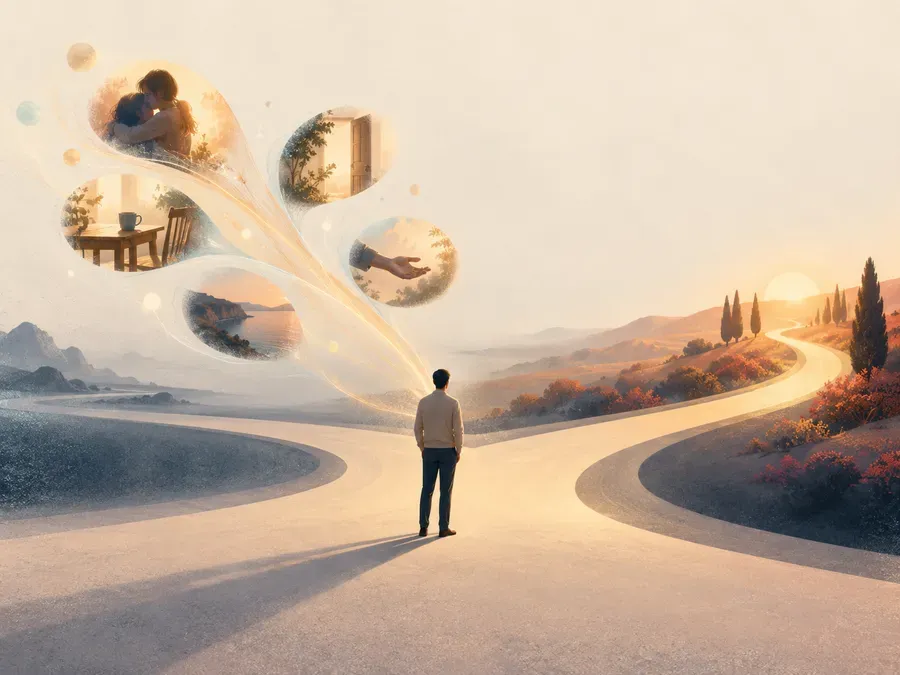
Before we make a choice, our brain looks through our memories and uses them to predict what might happen next. In other words, our past helps shape our future.
The exciting part is that this process is not fixed. We can actually train our brains to make better decisions. One powerful tool for doing this is gratitude.
Gratitude is much more than saying "thank you." It can change how we remember experiences, how we see opportunities, and how we imagine the future.
The Brain's Decision-Making Team
Two important parts of the brain work together whenever we make a choice.
The Hippocampus
The hippocampus acts like a memory library. It stores and retrieves memories from our past.
When you're trying to make a decision, the hippocampus searches for experiences that might help you understand the situation.
The Ventromedial Prefrontal Cortex (vmPFC)
This area of the brain acts like an evaluator.
After the hippocampus provides memories, the vmPFC decides how important those memories are. It weighs the possible rewards and risks and helps determine which option seems best.
Together, these two brain regions form a decision-making team.
Brain scans show that they often work at the same time. When a person feels grateful, the brain tends to pull up more positive memories. This gives the vmPFC better information to work with, making positive and cooperative choices seem more valuable.
Three Types of Gratitude
Researchers have discovered that gratitude comes in three different forms.
1. Gratitude as an Emotion
This is a short burst of gratitude.
For example, someone helps you with a problem, and you immediately feel thankful.
The feeling is strong but usually doesn't last very long.
2. Gratitude as a Mood
This type lasts longer.
You may spend a day or even a week feeling more appreciative than usual. During this time, you're more likely to notice good things happening around you.
3. Gratitude as a Trait
This is part of a person's personality.
People with high trait gratitude naturally focus on what is going well in their lives. They tend to appreciate opportunities, relationships, and positive experiences more often.
Researchers believe that gratitude as a mood and gratitude as a trait have the greatest long-term effects on thinking and decision-making.
How Gratitude Changes Memory
Our brains do not treat every memory equally.
Instead, our emotional state influences which memories are easiest to remember. Scientists call this memory bias.
For example, when someone is in a negative mood, they are more likely to remember failures, mistakes, and disappointments.
When someone is in a positive mood, they are more likely to remember successes, achievements, and meaningful experiences.
Research has found several interesting patterns:
People With High Gratitude
People who are naturally grateful tend to remember more positive experiences about themselves.
Their memories create a positive filter through which they view new situations.
Short Bursts of Gratitude
Researchers found that a brief gratitude exercise could make people feel grateful for a short time.
However, it did not significantly change their long-term memory patterns.
Daily Gratitude Practice
In another study, participants practiced gratitude every day for two months by writing down things they were thankful for.
Over time, they developed a stronger positive memory bias.
They became more likely to remember positive experiences and less likely to focus on negative ones.
This created a powerful advantage: their brains had a larger collection of encouraging memories to draw from when making decisions.
How the Brain Predicts the Future
Once the brain retrieves memories, it begins imagining possible outcomes.
Scientists call this process cognitive modeling.
Think of it as the brain running a simulation before making a choice.
The brain asks questions like:
What might happen if I do this?
What are the risks?
What are the rewards?
Gratitude can influence these mental simulations.
When Thinking Is Positive
People are more likely to:
Solve problems creatively
Stay flexible when challenges appear
Focus on long-term rewards
Work well with others
Look for opportunities
When Thinking Is Negative
People are more likely to:
Focus mainly on risks
Avoid challenges
Seek quick rewards instead of long-term success
Become less flexible in their thinking
Expect negative outcomes
The memories we rely on help determine which type of simulation our brain creates.
If our memory library contains more positive experiences, we are more likely to imagine positive possibilities.
Building a Grateful Mind
Scientists believe that personality traits influence our daily thoughts and behaviors.
The more often we practice gratitude, the stronger it becomes as a habit.
Over time, gratitude helps reshape the memories our brains access most often. Those memories then influence how we evaluate opportunities, solve problems, and make decisions.
In a sense, gratitude helps train the brain's decision-making team.
The hippocampus provides memories.
The vmPFC evaluates them.
When gratitude fills our memory library with positive experiences, our brain becomes better equipped to imagine hopeful and rewarding futures.
Gratitude is not simply about feeling good. It is a mental skill that helps us remember the best parts of our experiences and use them to build a better future.