
Tibet Ellor
@tibetellor
Presence ID: swp_id_tibetellor
About
I’m a creative strategist operating at the intersection of generative AI and storytelling—partnering with filmmakers, media organizations, and creative teams to integrate emerging technologies into production workflows, narrative development, and content strategy. As a project-based advisor, I help design future-ready creative systems that enhance storytelling, streamline production, and unlock new possibilities in visual innovation while preserving artistic vision. My work spans filmmaking, AI-powered media production, music, and creative direction, with a strong passion for exploring how technology can expand human creativity and transformative storytelling. I also enjoy writing and sharing perspectives on the evolving future of storytelling, filmmaking, music production, and creative culture. Professional interests and passions: Writing | Directing | Filmmaking | Songwriting | Music Production
Featured Highlights

The New Hollywood Gold Rush: Prospecting on YouTube In the summer of 2023, a ghost-white, embalmed hand became an unlikely symbol of a seismic shift in the film industry. The hand, a ceramic prop from the Australian horror film Talk to Me , wasn’t attached to a legacy franchise or a household-name director. Instead, it was the brainchild of Danny and Michael Philippou, better known to millions as RackaRacka, the creators of anarchic, high-octane YouTube videos filmed in their Adelaide suburbs. Their debut feature, made for a modest $4.5 million, stormed the global box office, grossing over $92 million and becoming A24’s highest-grossing horror film. It wasn't just a hit; it was a declaration. The digital-to-theatrical pipeline is no longer a curious anomaly; it is rapidly becoming one of the most vital and disruptive forces in modern cinema. For decades, the path to a director’s chair was a closely guarded, labyrinthine journey through film schools, industry connections, and the slow, arduous climb up the studio ladder. Hollywood was a fortress, and its gatekeepers held the keys. But the digital revolution, spearheaded by platforms like YouTube, has blown the gates wide open. A new generation of filmmakers has spent the last decade not just honing their craft in public, but also cultivating a direct, deeply personal relationship with their audience. This phenomenon, the rise of creator-led cinema , is more than just a new talent pool; it represents a fundamental rewiring of Hollywood's market dynamics , offering a potent antidote to the industry's crippling affliction: IP fatigue . The Digital Farm System: De-Risking Originality The success of the Philippou brothers is not an isolated incident but the culmination of a burgeoning trend. Before them, David F. Sandberg terrified audiences with his 2016 feature Lights Out , a concept he first perfected in a three-minute short on YouTube that went viral. The short film acted as an undeniable proof-of-concept, showcasing his ability to craft tension and a killer hook. The studio didn't have to gamble on an unknown quantity; they were investing in a proven product with a quantifiable digital footprint. Sandberg's journey exemplifies the new digital-to-theatrical pipeline : a meritocratic proving ground where talent can bypass traditional barriers. This process represents a profound democratization of distribution . For aspiring filmmakers, YouTube is not just a platform; it's a film school, a focus group, and a distribution network rolled into one. Creators can experiment with style, narrative, and tone, receiving immediate feedback from a global audience. They learn what resonates, what builds suspense, and how to tell a story efficiently and effectively—skills honed by the unforgiving algorithm that rewards retention and engagement. By the time a creator like RackaRacka sits down in a pitch meeting with a studio like A24, they bring more than a script. They bring a decade of data, a portfolio of work viewed hundreds of millions of times, and most importantly, a built-in audience that feels a sense of ownership and loyalty. This built-in audience engagement is the secret weapon in the creator's arsenal. Traditional film marketing involves spending tens of millions of dollars to convince a cold audience to care about a new story. For a creator-led project, the marketing starts years before the film is even greenlit. The Philippous' fans didn't just see a trailer for Talk to Me ; they saw the culmination of a journey they had been a part of. This transforms the audience from passive consumers into active evangelists, creating organic, word-of-mouth buzz that money simply cannot buy. It’s a paradigm shift from building an audience for a product to building a product for an existing audience. Genre Appeal and the Antidote to IP Fatigue It is no coincidence that the horror genre has become the primary conduit for this pipeline. Horror thrives on ingenuity over budget, concept over star power. It is a genre uniquely suited to the kind of high-concept, visually inventive storytelling that excels in short-form digital content. Creators like Sandberg and the Philippous cut their teeth on practical effects, clever editing, and a deep, fan-level understanding of what makes audiences jump. Their work feels authentic because it is born from a genuine love for the genre, not from a boardroom decision to exploit a market quadrant. This authenticity is precisely what audiences are craving. The modern box office is dominated by a relentless cycle of sequels, prequels, and cinematic universes. While these properties can be immensely profitable, a palpable sense of IP fatigue has set in. Viewers are growing weary of the familiar, yearning for the thrill of the new and unexpected. Creator-led films, particularly in the horror space, offer this in spades. They are often original stories with a distinct voice and a willingness to take risks that larger, committee-driven productions cannot afford to. Talk to Me wasn’t based on a comic book or a theme park ride; it was a raw, terrifying, and emotionally resonant story about grief and connection that felt utterly fresh.The staggering box office success of these micro-budget triumphs sends a clear message to the industry. Kyle Edward Ball's Skinamarink , an experimental horror film made for just $15,000, leveraged viral TikTok trends to earn over $2 million. It was a film that defied every conventional rule of commercial filmmaking, yet it found a massive audience because it offered a unique, unforgettable experience. This isn’t just about making cheap movies; it’s about the immense return on investment that comes from betting on a singular vision with a pre-validated audience. The market dynamics are clear: in a landscape saturated with billion-dollar behemoths, a well-crafted, original story can deliver one of the most profitable outcomes in the business. The Future: A Two-Way Street The rise of creator-led cinema is not about replacing the studio system but about forging a new, symbiotic relationship with it. Studios possess the capital, infrastructure, and global distribution networks that are still essential for a major theatrical release. Creators bring the fresh ideas, the proven concepts, and the engaged communities that represent the future of audience building. This fusion creates a powerful new model for filmmaking, one that is more agile, responsive, and ultimately more creative. Looking forward, the key question is how this trend will evolve. Will the digital-to-theatrical pipeline expand beyond horror into other genres like comedy, action, and sci-fi? Early indicators suggest it will. Creators like Freddie Wong (RocketJump) have long demonstrated a capacity for high-end visual effects and action choreography, while countless others have built careers on sharp, character-driven comedy. As studios become more comfortable with this new talent acquisition model, the scope of opportunity will undoubtedly widen. The journey from a suburban backyard in Adelaide to a worldwide premiere is no longer a fantastical dream. It is a viable, repeatable blueprint for success. The story of RackaRacka and their contemporaries is the story of a new Hollywood, one where the currency of influence is measured not just in opening weekend numbers, but in subscribers, views, and the unshakeable bond between a creator and their community. The embalmed hand of Talk to Me didn't just open a door to the spirit world; it opened the door to the future of cinema, a future that is being built, one viral video at a time, by the most innovative and audience-connected storytellers of our time.
Watch Feature
The Flicker and the Formula There was a time when the glow of a cinema screen felt like a portal. It was a negotiated dream, a pact between a visionary and an audience, whispered in celluloid. Think of the visceral panic of Jaws , the existential dread of Blade Runner , or the raw, untethered rebellion of the French New Wave. These films weren’t just products; they were artifacts of a specific time, place, and, most importantly, a singular, often uncompromising, point of view. They possessed a soul. Today, that soul feels increasingly elusive, suffocated under the weight of a system designed for replication, not revelation. The flicker has been replaced by a formula. This is the story of how the very industry built to cultivate cinematic dreams became their most formidable gatekeeper, leading to an era of profound creative homogenization . It is a diagnosis of a malaise that has plagued Hollywood for decades. But it is also a story of an unexpected, and profoundly disruptive, cure. As the old machine grinds to a halt, a new one is booting up—powered by artificial intelligence. And it might just be the force that re-injects risk, vision, and soul back into the art of filmmaking, heralding an age of true creator-led media . The Gilded Cage: Anatomy of Industrial Gatekeeping The term industrial gatekeeping sounds sterile, but its effects are deeply cultural. It represents the complex, interwoven network of financial, logistical, and ideological barriers that stand between a creator’s vision and the audience’s eyes. At its heart is a simple, brutal economic reality: making movies is astronomically expensive. A tentpole blockbuster can now cost upwards of $300 million to produce and another $150 million to market globally. With that level of investment, risk is not a creative choice; it is a financial liability. This risk-averse mindset has fundamentally reshaped the creative landscape. Studio executives, beholden to shareholders and obsessed with opening weekend box office numbers, have become masters of pattern recognition. They greenlight projects that fit a pre-existing mold: sequels, prequels, reboots, and adaptations of globally recognized intellectual property (IP). Why take a chance on a complex, original sci-fi drama when a superhero franchise guarantees a built-in audience and a billion-dollar return? The result is a feedback loop of familiarity. The audience is fed what has worked before, and because it is the only thing on the menu, they consume it, thus validating the studios' conservative strategy. Originality is systematically filtered out. Dr. Alistair Finch, a media theorist and author of The Content Conglomerate , describes this phenomenon as “the managed decline of artistic ambition.” He argues, “The conglomerate era of media ownership has prioritized synergy over substance. A film is no longer just a film; it is a potential theme park ride, a line of toys, a streaming series, a universe. This cross-platform monetization strategy inherently favors simple, easily digestible narratives over nuanced, challenging ones. The creative process has been subsumed by the marketing plan.” This system not only dictates what gets made but also who gets to make it. Aspiring filmmakers without connections, without a track record of commercial success, or with a story that doesn’t fit neatly into a marketable genre find the gates firmly shut. The mid-budget film—the character-driven drama, the quirky comedy, the adult thriller that once formed the backbone of cinema—has been all but eradicated, squeezed out by micro-budget indies and mega-budget blockbusters. This is the essence of creative homogenization : a narrowing of the aperture through which we see the world, curated by a handful of corporations chasing the same four-quadrant demographic. The Uprising: AI and the Dawn of Creative Empowerment For decades, the tools of high-concept filmmaking—convincing visual effects, elaborate world-building, epic scale—were the exclusive domain of those who could pass through the studio gates. An independent filmmaker might have a vision rivaling James Cameron’s, but they lacked the billion-dollar war chest to realize it. This is the barrier that Artificial Intelligence is poised to shatter. AI is not merely a new tool; it is a new paradigm, a democratizing force with the potential to trigger a Cambrian explosion of creativity. This revolution is happening across the entire filmmaking pipeline. In pre-production, generative AI platforms like Midjourney and Stable Diffusion allow a director to create stunningly detailed concept art and storyboards in hours, a process that once took teams of artists weeks. Writers can use AI to analyze script structures, brainstorm plot points, or even generate dialogue variations, acting as a tireless creative partner. The barrier to visualizing a world is no longer budget, but imagination. The impact on production and post-production is even more profound. AI-powered tools can automate laborious tasks like rotoscoping, color grading, and sound mixing. More spectacularly, AI-driven VFX can generate photorealistic creatures, environments, and effects at a fraction of the cost of traditional methods. We are rapidly approaching a future where a single artist can execute complex visual effects shots that would have required a dedicated studio just five years ago. This radical accessibility is the cornerstone of creative empowerment . The final frontier is generative video. Models like OpenAI’s Sora have demonstrated the ability to create high-fidelity video clips from simple text prompts. While still in its infancy, this technology signals a fundamental shift. Imagine a filmmaker typing: “A neo-noir tracking shot through a rain-slicked, futuristic Tokyo, cherry blossoms swirling under neon signs.” And a moment later, having a usable, stylistically coherent shot. This capability will decouple epic visual storytelling from epic budgets, placing the power to create breathtaking worlds directly into the hands of individual creators. The gatekeepers' primary leverage—control over the means of production—is evaporating. The Auteur 2.0 and Next-Generation Cinema The implications of this technological shift are tectonic. It heralds the rise of what could be called the “Auteur 2.0”—a new breed of filmmaker who is not reliant on the traditional studio ecosystem. These creators will be able to conceive, visualize, and execute ambitious projects with small, agile teams, or even entirely on their own. The result will be a new wave of creator-led media , where the primary driving force is not a marketing brief, but the singular vision of an artist. This will inevitably lead to a more diverse and vibrant cinematic landscape. Stories that were once deemed too niche, too strange, or too personal for the risk-averse studio system will find their way to the screen. We will see films that reflect a far wider range of cultural, aesthetic, and philosophical perspectives. The homogeneity enforced by the industrial complex will give way to a flourishing of unique voices. This is the promise of next-generation cinema : a medium defined not by its budget, but by its audacity. Of course, this transition is not without its anxieties. Concerns about job displacement for traditional artists, the ethics of AI-generated imagery, and the potential for a flood of low-quality, soulless content are valid and must be addressed. However, to focus solely on these fears is to miss the larger picture. Every major artistic medium has been revolutionized by technology, from the printing press to the portable camera. Each time, the old guard predicted the death of the art form, and each time, they were wrong. Technology, ultimately, is an amplifier. In the hands of a committee focused on maximizing profit, it produces formula. But in the hands of a visionary, it can produce magic. The soul of cinema was never truly killed; it was merely priced out of the market. It was exiled from the boardrooms and soundstages and forced into hibernation. AI is not creating a new soul for cinema. It is simply providing the tools for the old one to be rediscovered, reawakened, and reborn in the hands of those who have, until now, been standing on the outside of the gates, waiting for their chance to tell a story.
Watch Feature
Venture capital is pouring billions into artificial intelligence, but its rigid model is ignoring a new class of founders who are turning real-world constraints into groundbreaking solutions. The cost is more than missed opportunities—it's a fundamental misunderstanding of what innovation truly is. The numbers are staggering, almost mythological. A recent signal from industry reporting suggests investors deployed hundreds of billions of dollars into thousands of AI startups in a single quarter, a torrent of capital chasing the next generational platform. The narrative is a familiar one, centered on gleaming data centers, ever-larger language models, and the polished pitch decks of founders from a handful of elite postcodes. This is the story of AI we are told: a revolution born of immense computational power and limitless financial resources, unfolding within the pristine, controlled environments of the world’s most advanced tech campuses. But this story, for all its momentum, is dangerously incomplete. It misses the plot entirely. Far from the manicured lawns of Menlo Park, another AI revolution is taking shape. It isn't happening in ideal conditions; it is happening because conditions are not ideal. It’s being built in places where the power grid is a suggestion, where internet connectivity is a luxury, and where logistical chains are fragmented by design. Here, founders are not optimizing for fractional gains in user engagement but for survival—of languages, of patients, of communities. A recent commentary in Fast Company highlights this profound disconnect, noting that only a 'single-digit sliver' of this massive capital flow is directed toward AI applications solving social and environmental challenges. This isn't just an oversight; it's a systemic market failure, a blind spot in the venture capital worldview that mistakes pedigree for potential and convenience for value. The dominant investment model is calibrated to recognize patterns it has seen before. It seeks frictionless scalability, network effects, and a clear path to a ten-figure exit. But the world’s most urgent problems are anything but frictionless. They are messy, complex, and deeply contextual. The founders building solutions for these problems, as the Fast Company piece illustrates with examples like Nigeria's LifeBank or Africa-focused Amini, possess a form of expertise that cannot be learned in a Stanford lecture hall: the expertise of proximity. They are not merely solving a problem; they are living inside it. This lived reality forces a different kind of innovation—one that is more resilient, more efficient, and more intrinsically suited to the chaotic reality it aims to serve. While one part of the world builds AI to generate poetry, another builds it to deliver blood. The question for the next decade is which one we choose to value. The High Cost of a Homogenous Lens The current moment in artificial intelligence is defined by its sheer concentration—of capital, of talent, and of ideology. The focus on foundational models and enterprise SaaS solutions, while commercially potent, creates an innovation monoculture. When the vast majority of investment is funneled into a narrow archetype of founder solving a narrow set of problems, the resulting technology inevitably reflects a narrow worldview. This matters now more than ever because AI is not just another software cycle; it is a tool for shaping reality, for allocating resources, and for defining possibilities. A homogenous AI ecosystem risks building a future optimized for the few, while leaving the most complex global challenges unaddressed. The danger is that the problems deemed 'un-investable' by the current paradigm—because they are too fragmented, too localized, or their returns are measured in lives saved rather than quarterly earnings—are precisely the areas where AI could have its most profound impact. The systematic undercapitalization of founders with proximity to these issues is, therefore, not just a missed financial opportunity. It is a strategic failure to build a diverse portfolio of solutions for a diverse and complex world. It reinforces the very inequalities technology is often promised to solve, creating a digital infrastructure that serves those who already have infrastructure, and further marginalizing those who do not. The Expertise of the Unideal Silicon Valley has long operated on the principle of building for ideal conditions and assuming the world will catch up. It presupposes ubiquitous high-speed internet, stable power, and digitally literate users with the latest hardware. But as the examples cited in the Fast Company piece demonstrate, this is a profound luxury. For innovators like Temie Giwa-Tubosun of LifeBank, the 'unideal' is not a bug; it is the core design specification. An AI-powered logistics network for blood delivery in Nigeria cannot assume a functioning grid or clear roads. It must be built with redundancy, flexibility, and a deep understanding of local context. This is what 'proximity as expertise' truly means. It is the baked-in knowledge that allows a platform like Amini to deliver vital agricultural data to farmers via simple SMS, bypassing the need for smartphones and internet entirely. This is not a lesser form of technology; it is arguably a more advanced one, engineered to thrive amidst chaos. These founders are forced to be more creative, more efficient, and more resilient because they have no other choice. They are turning constraints that would disqualify a typical startup in a VC pitch into a competitive advantage, creating solutions that are antifragile by nature. This is a critical industry implication: the most robust and adaptable AI systems may not emerge from sterile labs, but from the messy, unpredictable environments where they are needed most. The Tension Between Scale and Substance The central tension lies in the definition of 'scale.' For traditional venture capital, scale means exponential user growth on a global, homogenous platform—a model perfected by social media and consumer software. The goal is to minimize friction and maximize viral loops. However, the problems being solved by the founders highlighted in the source material are inherently high-friction. Organizing blood delivery, preserving Indigenous languages, or supporting smallholder farmers involves navigating complex physical, cultural, and economic systems. The 'scale' of LifeBank is not measured in millions of app downloads, but in the 3,000 hospitals it serves and the 45-minute delivery window it maintains. This is a scale of impact, not just of audience. The market tension is clear: the VC model is optimized for one definition of scale, while the world’s most pressing needs require another. This is where the call for a 'connective bridge' of impact investors, development finance, and philanthropy becomes a strategic imperative, not just a moral one. These alternative funding mechanisms can provide the patient, risk-tolerant capital needed to prove out models that don't fit the standard ten-year fund cycle. They can value a return measured in 'people served per dollar' and understand that creating a new market in a fragmented environment requires a different timeline and support structure. The challenge is not to force these ventures into the old model, but for capital to evolve to meet the opportunity they represent. Redrawing the Map of Innovation Ultimately, this is not just about funding a different type of company; it's about fundamentally redrawing our map of where innovation comes from. The current map is small and well-trodden, with a few key hubs marked in bright lights. But the signal from the front lines of global problem-solving suggests the most fertile territories lie in the blank spaces, the areas marked 'here be dragons' by conventional investors. The founders in these regions are not edge cases; they are cartographers of the future, charting paths to apply advanced technology in the places it has been systematically excluded. They are proving that world-class AI solutions can be built anywhere, for anyone, and that local constraints are a source of global strength. For the investment community, the imperative is to become better explorers. It requires a new lens—one that sees expertise in lived experience, value in resilience, and opportunity in complexity. The talent and the technology already exist. The markets are waiting. The founders are already building, as the Fast Company piece notes, 'with a fraction of the resources, in conditions designed to stop them.' The final question is not whether they can succeed, but whether the global flow of capital is wise enough to find them before the most critical opportunities of our time are lost. While one part of the world builds AI to generate poetry, another builds it to deliver blood. The question for the next decade is which one we choose to value. The greatest innovations may not come from environments of infinite resource, but from the crucible of absolute necessity. Proximity to a problem is a form of expertise that cannot be learned in a lecture hall; it must be lived. Venture capital is calibrated to find unicorns in a manicured field, but it's blind to the solutions being built in the jungle. Key Insights The intense concentration of AI investment in traditional tech hubs creates a dangerous innovation monoculture, overlooking critical global problems. Founders with direct 'proximity' to a problem possess a unique form of expertise, enabling them to build more resilient and context-aware solutions. Real-world constraints, such as unreliable infrastructure, should be viewed not as barriers but as powerful design inputs for creating superior technology. The venture capital industry's definition of 'scale' is misaligned with the needs of high-impact ventures, which often scale in depth and systemic change rather than user numbers alone. Alternative funding models that blend philanthropic and private capital are essential to de-risk and nurture AI solutions built for complex, fragmented environments. The future of applied AI depends on shifting the investment focus from ideal lab conditions to the messy, high-friction realities where technology is needed most. Based on insights from a recent commentary in Fast Company.
Read NarrativeContent Archive
Explore all publications and signals.
Jun 6, 2026
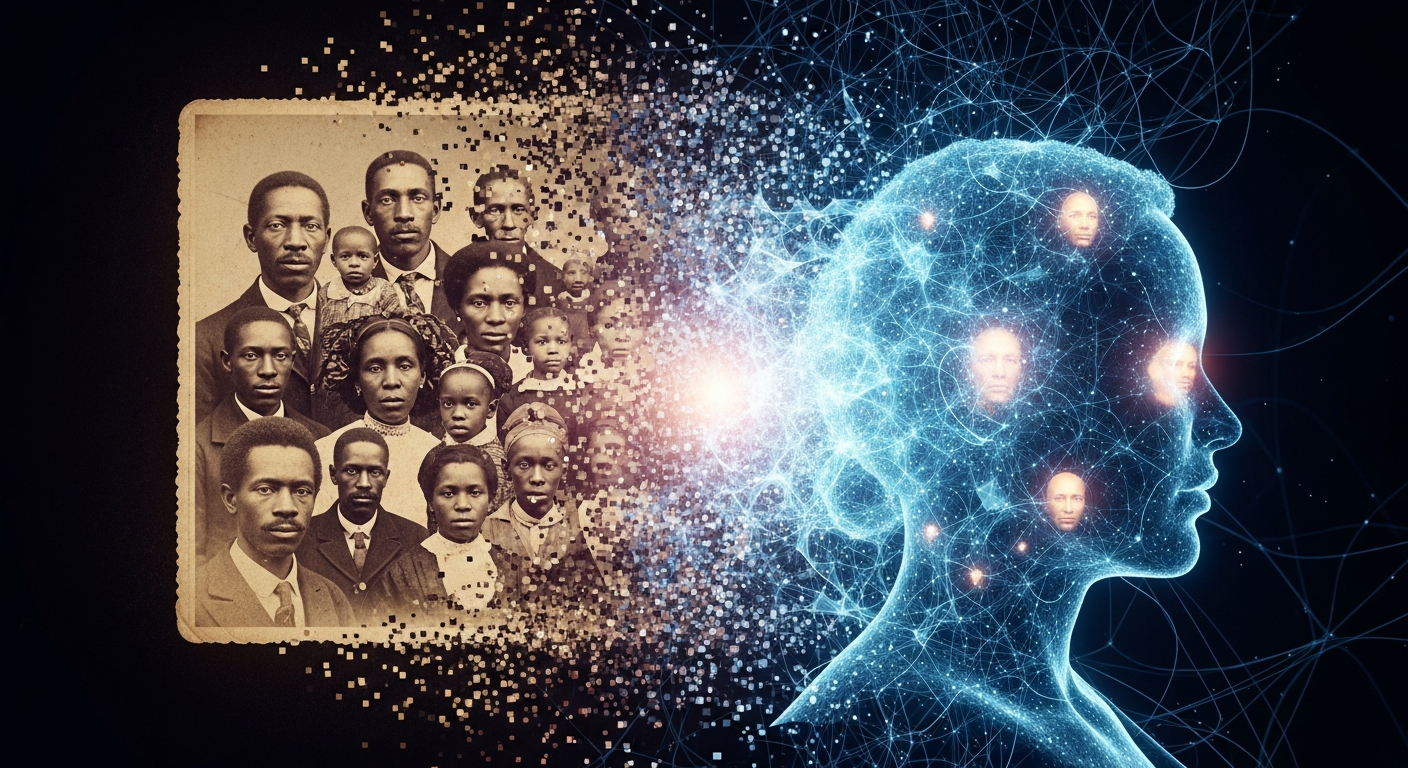
A new wave of startups is using artificial intelligence to preserve our most cherished family stories. But in the quest to digitize memory, are we building a living archive or a mausoleum of data? The stories die with the people. It is an ancient, universal grief. The cadence of a grandparent’s voice, the specific, unprompted detail in a war story, the recipe for a dish that never tastes the same when replicated from a written card—these are the fragments of identity that evaporate with a final breath, leaving behind a silence filled only with imperfect, second-hand recollection. For generations, we have accepted this loss as a fundamental condition of being human. We have tried to fight it with diaries, photographs, and crackling home videos, each a static artifact capturing a sliver of a life, but never its living, breathing narrative essence. A recent signal from Black Enterprise highlights a new front in this timeless struggle. The report touches on a startup, born from a student’s personal loss, that is employing artificial intelligence to preserve oral histories. While the specifics of this single venture are not the focus, its existence points to a much larger, more profound industrial shift. We are witnessing the dawn of 'Legacy Tech,' an emerging category where AI is being deployed not just to organize the past, but to reanimate it. These platforms promise to capture, index, and even synthesize the voices and stories of our elders, creating interactive archives that defy the finality of death. This is more than a digital scrapbook; it is a fundamental rewiring of our relationship with heritage, memory, and loss. The question is no longer if we can preserve these stories, but how—and at what cost. In the mission to build a perfect, searchable past, we risk creating a future where our most human stories are mediated, edited, and owned by algorithms, transforming the sacred act of remembering into a product. The Confluence of Need and Technology The rise of Legacy Tech is not an accident of innovation; it is the product of a powerful confluence of demographic, cultural, and technological forces. First, the technology has finally caught up to the ambition. The proliferation of sophisticated, accessible AI—particularly large language models (LLMs) and voice-synthesis technologies—provides the engine. These tools can transcribe rambling conversations with uncanny accuracy, identify key themes and people, and even clone a person’s voice to narrate their own stories posthumously. What once required a documentarian’s budget and skillset is becoming available as a consumer-grade application. Second, a profound demographic shift is underway. The Baby Boomer generation, a cohort that has defined cultural and economic trends for half a century, is entering its twilight. Their children and grandchildren, digitally native and accustomed to on-demand access to information, are confronting the imminent loss of a massive repository of lived experience. This creates a powerful, emotionally charged market demand for preservation solutions that feel more alive than a photo album. Finally, there is a growing cultural urgency, particularly within marginalized communities, to reclaim and preserve narratives that have been historically overlooked or erased. For families and communities whose histories were not written down but passed through oral tradition, the stakes are existential. The promise of an AI that can safeguard this heritage is immensely compelling, offering a tool for cultural resilience and generational connection. From Archive to Experience: The Monetization of Memory The deeper industry implication is the creation of an entirely new value proposition. This is not simply about storage. The business of memory is shifting from a static, archival model to a dynamic, experiential one. Platforms like Ancestry.com and 23andMe built billion-dollar businesses on the data of the past—census records, ship manifests, DNA markers. They sell access to historical documents. Legacy Tech, however, aims to sell access to the feeling of the past. The business models currently taking shape revolve around 'legacy-as-a-service.' This could manifest as a subscription fee for a family's living digital archive, premium one-time services for professionally curated interviews, or tiered access to AI-driven features like a 'conversational' interface that allows a user to 'ask' their great-grandmother about her life. This pivot turns memory into a renewable resource and an interactive product. It also opens the door for adjacent markets in digital memorials, AI-generated eulogies, and virtual reality experiences where users can 'sit' with a holographic representation of a loved one. The total addressable market is not just the genealogy sector; it is the multi-trillion-dollar wellness, personal development, and even entertainment industries. We are commercializing the act of remembrance, creating a new economy where the past is the ultimate content. The Tension Between Authenticity and the Algorithm Herein lies the central tension: the friction between authentic human memory and clean algorithmic output. Human memory is not a perfect recording. It is messy, contradictory, emotional, and filled with pauses, self-corrections, and telling omissions. The richness of an oral history is often found in these imperfections—the crack in a voice, the long silence after a difficult question. An AI, designed for efficiency and coherence, may inadvertently scrub these nuances away. In transcribing, summarizing, and indexing a life story, the algorithm becomes an editor, and its biases, however subtle, can reshape the narrative. Does it prioritize dramatic moments over quiet reflections? Does it flatten complex personalities into archetypes? Furthermore, the advent of voice synthesis creates a more profound ethical quandary. Is an AI-cloned voice reading a transcript truly a preservation of a person, or is it a digital puppet—a deepfake of the soul? This technology forces us to confront the nature of authenticity. We desire a perfect, incorruptible record of our loved ones, but the very act of achieving that perfection might strip away the humanity we sought to preserve. The market will reward platforms that feel seamless and polished, but a polished memory may be a false one. The struggle will be to design systems that preserve, rather than pave over, the beautiful, flawed texture of a real human life. The Permanent Record and the Future of Grief As we stand at the beginning of this technological shift, we must consider the long-term consequences. What happens to this data in 50 years? Who owns the digital ghost of your grandmother? Is it the family, or the corporation that houses the data and owns the proprietary AI? The terms of service for these emerging platforms will become as critical as any last will and testament. We are creating permanent, accessible, and potentially interactive records of private lives, and the governance of these digital souls is a challenge we are wholly unprepared for. This technology also has the potential to reshape our understanding of grief and loss. The ability to endlessly replay a loved one’s stories, or even 'interact' with their AI counterpart, could be a profound comfort. But it could also be a psychological trap, preventing the necessary and painful process of letting go. When does preservation become a refusal to accept absence? There is no easy answer. The impulse to capture the stories of those we love is a noble one. But as we build these algorithmic archives, we must proceed with caution and intention. We are not merely saving stories; we are designing the future of how we relate to our past, to our families, and to the very concept of a life well-lived. The goal should not be to build a perfect, immortal echo, but to create a tool that helps us better understand the beautifully imperfect people who came before us. We are witnessing the dawn of 'Legacy Tech,' an emerging category where AI is being deployed not just to organize the past, but to reanimate it. The business of memory is shifting from a static, archival model to a dynamic, experiential one. Is an AI-cloned voice reading a transcript truly a preservation of a person, or is it a deepfake of the soul? The terms of service for these emerging platforms will become as critical as any last will and testament. Key Insights AI is creating a new market category, 'Legacy Tech,' focused on the experiential preservation of personal and oral histories. The business model is shifting from selling historical data (like Ancestry.com) to providing 'legacy-as-a-service' subscriptions. A key market driver is the demographic shift of the aging Baby Boomer generation and the desire of their digital-native descendants to preserve their stories. This technology introduces a core tension between the messiness of authentic human memory and the clean, coherent output of an algorithm. Profound ethical questions arise around data ownership, the rights of the deceased to their 'digital likeness,' and the long-term psychological impact on grief. The cultural urgency to preserve the histories of marginalized communities is a significant catalyst for the adoption of these tools. Based on a signal from a Black Enterprise report on a startup using AI to preserve oral history.
Watch Feature →