
Kent Stark
@kentstark
Presence ID: swp_id_kentstark
About
I’m Kent Stark, an investigative journalist committed to uncovering the truth behind the headlines. I follow the evidence, ask difficult questions, and dig beneath the surface to expose hidden patterns in power, policy, crime, culture, and public accountability. My work is driven by a simple purpose: to help readers understand the forces shaping their communities and the wider world.
Featured Highlights
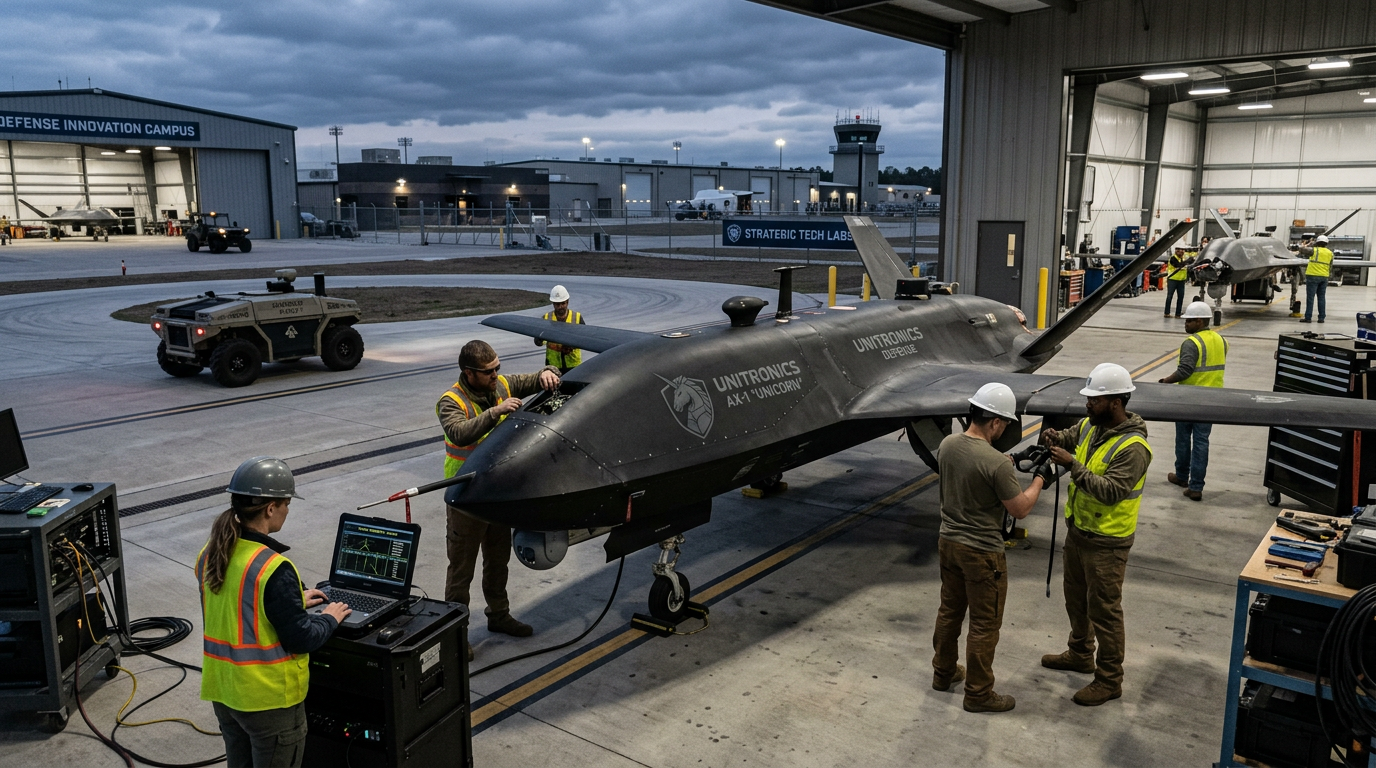
The rise of defense-tech unicorns like Shield AI marks more than a market shift. It signals a profound recalibration in tech culture, where the idealism of the past decade confronts the hard pragmatism of a new geopolitical reality. There are ideas that Silicon Valley deems merely bad, and then there are ideas it deems ‘dumb.’ The former are quietly starved of capital; the latter are openly mocked as heresies against the prevailing catechism. A decade ago, building a business to sell AI-powered autonomous weapons to the U.S. government was firmly in the second category. It wasn’t just a bad bet; it was a violation of the industry’s carefully cultivated self-image as a global force for connection and progress. As Andreessen Horowitz partner Peter Levine reportedly told Shield AI co-founder Brandon Tseng, it was the ‘dumbest idea yet,’ ranking alongside pre-trust-and-safety Uber and Airbnb in its perceived folly. Today, Shield AI is valued at nearly $13 billion. Its autonomous drone software, Hivemind, is deployed in active war zones from Ukraine to the Middle East. And the ‘dumb idea’ has become one of the most compelling, and fiercely debated, investment theses in venture capital. A recent interview with Tseng, a former Navy SEAL, published by Fast Company, serves as a powerful signal of this transformation. His narrative is one of vindication, but it’s a vindication that extends far beyond a single company’s balance sheet. It reflects a tectonic shift in the landscape of technology, where the philosophical anxieties of the 2010s are being bulldozed by the geopolitical urgencies of the 2020s. The story of Shield AI is the story of Silicon Valley’s uncomfortable reckoning with power. It charts a course from an era where tech giants faced employee walkouts over military contracts to one where veteran-founders are building ‘warrior cultures’ inside their startups. It’s a transition from a worldview shaped by the utopian possibilities of a networked globe to one defined by the stark realities of great power competition. Tseng’s journey from SEAL operator to defense-tech titan is not an outlier; it is the archetype of a new class of founder rewiring the industry’s moral and strategic circuitry. This isn’t just about building better drones. It’s about redefining the role of technology in a world that has refused to conform to the neat, optimistic narratives once spun in Palo Alto. The 'Dumb Idea' That Became a Strategic Imperative The question of why defense tech matters now can be answered in two words: reality intervened. For much of the past decade, a significant faction of the tech world operated under a kind of self-imposed embargo against the military. The backlash against Google’s Project Maven in 2018, where thousands of employees protested the company’s work on AI for drone footage analysis, was the high-water mark of this sentiment. It was a moment when the industry’s brightest minds seemed to collectively declare that their work was meant for optimizing ad clicks and social graphs, not kill chains. But while Silicon Valley debated its conscience, the world grew more dangerous. The invasion of Ukraine shattered any lingering illusions about a post-historical era of peace, demonstrating in brutal fashion that conventional warfare, augmented by cutting-edge technology, was not a relic of the past. Simultaneously, the strategic competition with China has moved from an abstract economic concern to a central organizing principle of U.S. policy. Suddenly, technological supremacy wasn't about having the slickest smartphone; it was about national security. In this new context, Tseng’s vision—that every military asset should be powered by AI—no longer sounds like a fringe provocation. It sounds like a policy objective. The ‘dumb idea’ became a strategic imperative, and venture capital, ever the opportunist, followed suit. The flow of funds from firms like Andreessen Horowitz and Founders Fund into defense tech represents a pragmatic acknowledgment that the world’s most complex problems are now also its most lucrative. The End of Techno-Idealism The deeper implication of Shield AI’s ascent is the erosion of the techno-idealism that has long served as Silicon Valley’s unofficial ideology. For years, the industry’s narrative was one of empowerment, of giving tools to the people to build a more open and connected world. This ethos was always selective, conveniently ignoring the disruptive and often destructive consequences of its platforms. But the aversion to defense work was a core tenet of this belief system. To work with the military was to be tainted, to become part of ‘the system’ that tech was supposed to be disrupting. What we are witnessing now is a great intellectual realignment. The new guard of defense-tech founders, many of whom, like Tseng, come from the military, are not disrupting the system; they are upgrading it. They argue that the highest form of impact is not a new social app, but the preservation of national security and the protection of democratic values against authoritarian rivals. This perspective reframes the entire purpose of technology. It posits that the most important problems are not user friction in a checkout flow, but the challenges of deterrence and battlefield superiority in a multipolar world. This shift forces a difficult conversation. It exposes the naivete of believing that powerful technology like AI could ever remain neutral or be cordoned off from the domains of conflict and state power. The rise of companies like Shield AI and Anduril is a market signal that Silicon Valley is, belatedly and reluctantly, growing up, trading its youthful fantasies of changing the world through code alone for the sober responsibility of defending it. The Warrior's Code and the Founder's Burden A fascinating tension emerges from Tseng’s commentary: the fusion of a Navy SEAL’s ethos with the anxieties of a venture-backed founder. He describes Shield AI as having a ‘warrior culture’—disciplined, mission-focused, relentless. This is a stark departure from the perks-laden, consensus-driven cultures of many consumer tech companies. It suggests an organization optimized for execution under extreme pressure, where failure has consequences far greater than a missed product deadline. Yet, in a revealing admission, Tseng states he stresses more over losing investors’ money than he did over the risk to his own life on missions as a SEAL. This highlights a profound psychological duality. On one hand, the warrior’s code provides a framework for resilience and purpose. On the other, the founder’s burden introduces a different kind of existential risk—the fiduciary duty to backers who have placed billion-dollar bets on his vision. This tension is central to the new defense-tech movement. These founders are not just engineers; they are former operators who have seen the consequences of technological deficits firsthand. Their motivation is deeply personal, yet their success is measured by the impersonal metrics of market capitalization and investor returns. This creates a unique pressure cooker, where the mission to save soldiers' lives is inextricably linked to the need to generate a 10x return. It also raises questions about how a ‘warrior culture’ translates to a corporate setting. While it can foster incredible focus, it could also risk silencing internal dissent, a crucial element for ethical deliberation, especially when building technologies with life-or-death applications. An Unstoppable and Unsettling Momentum Tseng’s assertion that the momentum toward AI-commanded military assets is ‘unstoppable’ is perhaps the most critical and unsettling takeaway. He suggests that by 2035 or 2045, it will be the norm. This is not presented as a choice but as an inevitability, a technological destiny we are racing toward. This framing has powerful consequences. It transforms the debate from if we should develop autonomous weapons to who will develop them fastest and most effectively. The logic is one of competitive necessity: if we don't build them, our adversaries will. This argument effectively short-circuits much of the ethical debate, recasting it as a matter of strategic urgency. In this worldview, the greatest risk is not the existence of autonomous weapons, but falling behind in the race to create them. Tseng expresses complete trust in the U.S. military’s stewardship and the State Department’s judgment on exports, effectively outsourcing the ethical calculus to established institutions. For a tech industry that has long championed its own moral authority, this is a radical act of deference. It signals a future where the most consequential decisions about AI will not be made in Silicon Valley boardrooms or at ethics conferences, but within the classified confines of the Pentagon and the State Department. The ‘dumb idea’ is no longer a question of whether to build, but how fast. The momentum is real, and it is carrying us into a new era of warfare where the lines between coder, capitalist, and combatant are irrevocably blurred. The journey from a 'dumb idea' to a decacorn valuation charts the tech industry's reluctant but decisive pivot from idealism to geopolitical pragmatism. Founders with combat experience are recoding the DNA of Silicon Valley, replacing 'move fast and break things' with the disciplined, mission-oriented focus of a 'warrior culture'. In the new defense-tech era, the ultimate ethical arbiter is not a corporate review board, but the State Department. The belief that autonomous warfare is inevitable creates a self-fulfilling prophecy, turning a technological race into a strategic imperative. Key Insights Defense tech's resurgence is driven by geopolitical shifts, making it a patriotic and highly profitable venture capital category. The new wave of defense-tech leaders are often military veterans, embedding a 'warrior culture' into their startups. Silicon Valley's historical skepticism of the military-industrial complex is being replaced by a pragmatic alignment. Ethical oversight for autonomous weapons is increasingly being deferred to government bodies like the State Department. The founder's journey in defense tech involves unique pressures, comparing the stress of fiduciary duty to the risks of combat. The core belief in the inevitability of AI in warfare is accelerating its development and deployment. Companies like Shield AI represent a fusion of cutting-edge AI development and national security imperatives. The cultural shift in tech marks an end to an era of selective idealism in favor of confronting global power dynamics. Based on a recent interview snippet with Shield AI co-founder Brandon Tseng published by Fast Company.
Watch FeatureContent Archive
Explore all publications and signals.
No additional content found.