The Accidental Revolution: How Elara Vance's Creator-First Platform Ignited a Global Movement
In the bustling, often chaotic landscape of the modern internet, where digital platforms emerge and vanish with the speed of a trending hashtag, Elara Vance harbored a vision both simple and profound. She wasn't aiming to conquer the world, but rather to carve out an equitable corner for independent creators. A software engineer with a quiet passion for digital art, Elara had grown increasingly frustrated by the labyrinthine interfaces and exorbitant fees that plagued existing marketplaces. She witnessed talented artists and designers struggling to sustain themselves, their profits siphoned away by opaque algorithms and corporate gatekeepers.
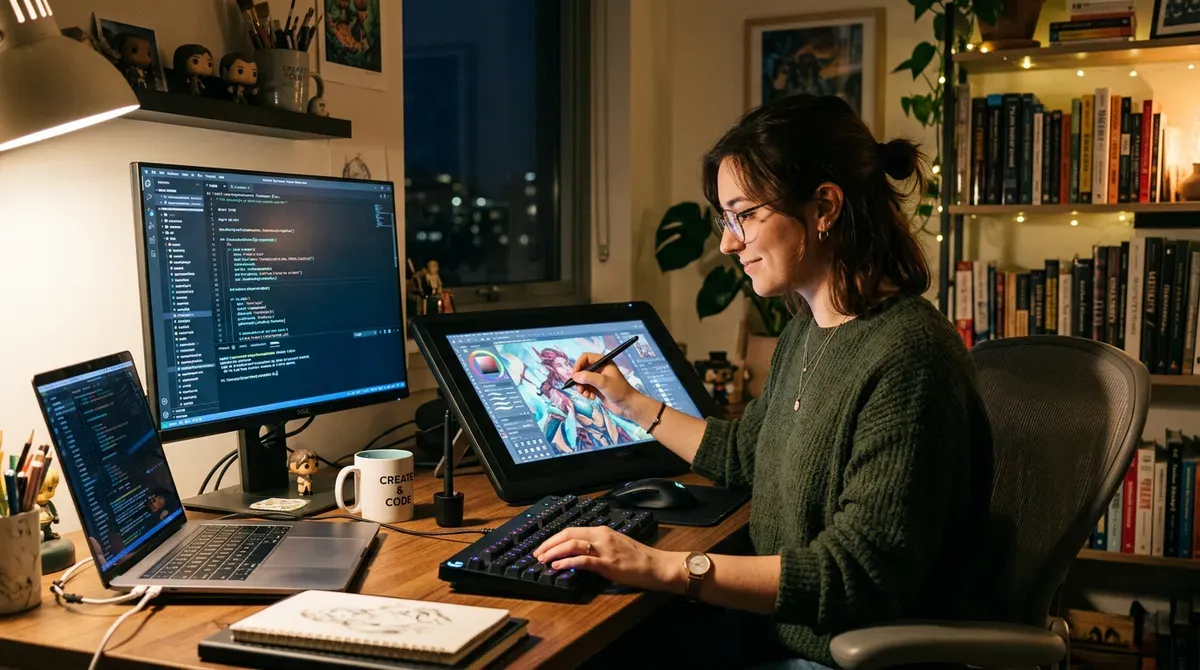
Her initial foray into what would become a global phenomenon was born not of grand ambition, but of a deeply personal necessity. Elara simply wanted to sell her own digital brushes and textures without feeling exploited. So, she began to code. Fueled by late nights, lukewarm coffee, and an unwavering conviction, she meticulously built 'Canvas & Code' – a platform designed with a singular, radical idea: to unequivocally put creators first. This marked the genesis of her independent entrepreneurship, a bootstrapped endeavor driven by a clear, albeit initially narrow, founder vision.
Canvas & Code launched quietly, almost timidly, a direct-to-consumer brand in its purest form. Elara’s marketing budget was precisely zero; her outreach consisted of posting in a few online forums and word-of-mouth among artist friends. Yet, something unexpected began to unfold. The initial trickle of users, drawn by the promise of fair pricing and a transparent fee structure, swiftly became a steady stream. Artists, weary of the digital churn and exploitation, found solace in Canvas & Code's refreshing simplicity and Elara’s genuine commitment to their success. This was the first undeniable hint of market traction, driven not by aggressive campaigns, but by a profound resonance with a deeply felt, underserved need.
Initially, Elara remained focused on organic business growth, iterating and improving the platform based on direct user feedback. She personally handled every customer service inquiry, often replying within minutes, even at odd hours. This hands-on, authentic approach transcended mere good business practice; it became the bedrock of profound trust formation. Users weren't just clients; they were collaborators, their suggestions frequently integrated into subsequent platform updates. This organic, founder-led growth strategy, while deliberate, proved incredibly potent, fostering a powerful sense of ownership among early adopters.
The platform’s expansion wasn't merely numerical; it was profoundly qualitative. Users began connecting with each other, extending beyond Canvas & Code’s basic messaging features to external forums, where entire threads were dedicated to the platform. They shared tips, celebrated successes, and offered mutual support during creative blocks. This marked the nascent stage of genuine community building, an accidental by-product of Elara’s ethical approach and the shared values she championed. Canvas & Code transcended its role as a marketplace; it became a vibrant gathering point, a digital atelier where artists felt seen, valued, and empowered.
Elara, still very much an engineer at heart, initially viewed these burgeoning inter
actions as positive externalities. However, as the volume of engagement surged, she began to discern a powerful pattern. Her users weren't just buying and selling; they were actively evangelizing. They wrote blog posts, created tutorials, and enthusiastically recruited new members. This was customer advocacy in its most potent form, a testament to the deep wells of customer loyalty she had unknowingly tapped. The platform had transcended its functional purpose, cultivating a profound sense of audience belonging.
One pivotal morning, Elara received an email that crystallized this profound shift. It wasn't a feature request or a bug report, but a heartfelt message from a young artist in a developing country, expressing how Canvas & Code had transformed their ability to earn a living and connect with a global creative community. It was in that moment Elara realized her accidental vision had blossomed into a true movement, a testament to the power of putting people first in a digital world often driven by profit alone.