
.png?alt=media&token=bbcc9cb9-b25b-4141-ab0c-d09bcf32f2d6)
The Story as the Startup: Why the Future of Media Is Built on Portable IP
As traditional media outlets struggle, a new model is emerging where the story itself—not the article—is the core asset. But this strategic shift from journalist to IP developer carries its own set of profound risks and rewards.
A recent report that journalist Laurie Segall is launching a deepfake series with Paris Hilton feels, at first glance, like a Mad Libs of modern culture. It’s a combination of tech-world gravitas, celebrity ubiquity, and a technology so fraught with peril that its name has become a synonym for digital deception. It would be easy to dismiss this as a gimmick, a shiny object designed to capture attention in a saturated media environment. But that would be a mistake. This development, highlighted in a signal from Inc.com, isn't just a curiosity; it’s a flare sent up from the future of the media industry. It’s a proof point for an emergent business model that treats the story not as a finished product, but as a piece of portable intellectual property—an asset to be developed, franchised, and deployed across multiple platforms and formats. For more than a century, the fundamental unit of journalism has been the article. It was a discrete object with a beginning, a middle, and an end, packaged neatly on a page or a screen. The business model was built around this container: sell subscriptions to access it, or sell the attention of those who read it to advertisers. That model is broken, and its collapse has left a vacuum. Into that vacuum comes a new proposition, championed by figures like Segall, a former CNN senior tech correspondent who founded the media company Mostly Human. The proposition is this: What if the story is the startup? What if the core asset isn't the text, but the underlying investigation, the exclusive access, the unique perspective? In this model, a published article is not the final draft; it is merely the first round of seed funding for a much larger enterprise. This is the shift from content creation to IP development, and it represents the most significant strategic realignment in the media industry in decades. This approach fundamentally redefines the role of the journalist. They are no longer just a writer or a reporter; they are a founder, a showrunner, an executive producer of their own work. This isn't simply about launching a newsletter on Substack or a podcast on Patreon. It’s about building a multi-pronged business around a core narrative engine. An investigation into a rogue AI lab might begin as a long-form feature, but its true value is realized when it becomes a narrative podcast series, is optioned for a scripted drama, forms the basis of a documentary, and provides the material for a paid corporate briefing. Each expression of the IP reaches a different audience and opens a new revenue stream, creating a resilient, diversified business that is not dependent on the whims of a single platform or algorithm. It’s a strategy for survival and growth in an industry defined by volatility, and it’s a model that places the power, and the pressure, squarely on the shoulders of the creator.
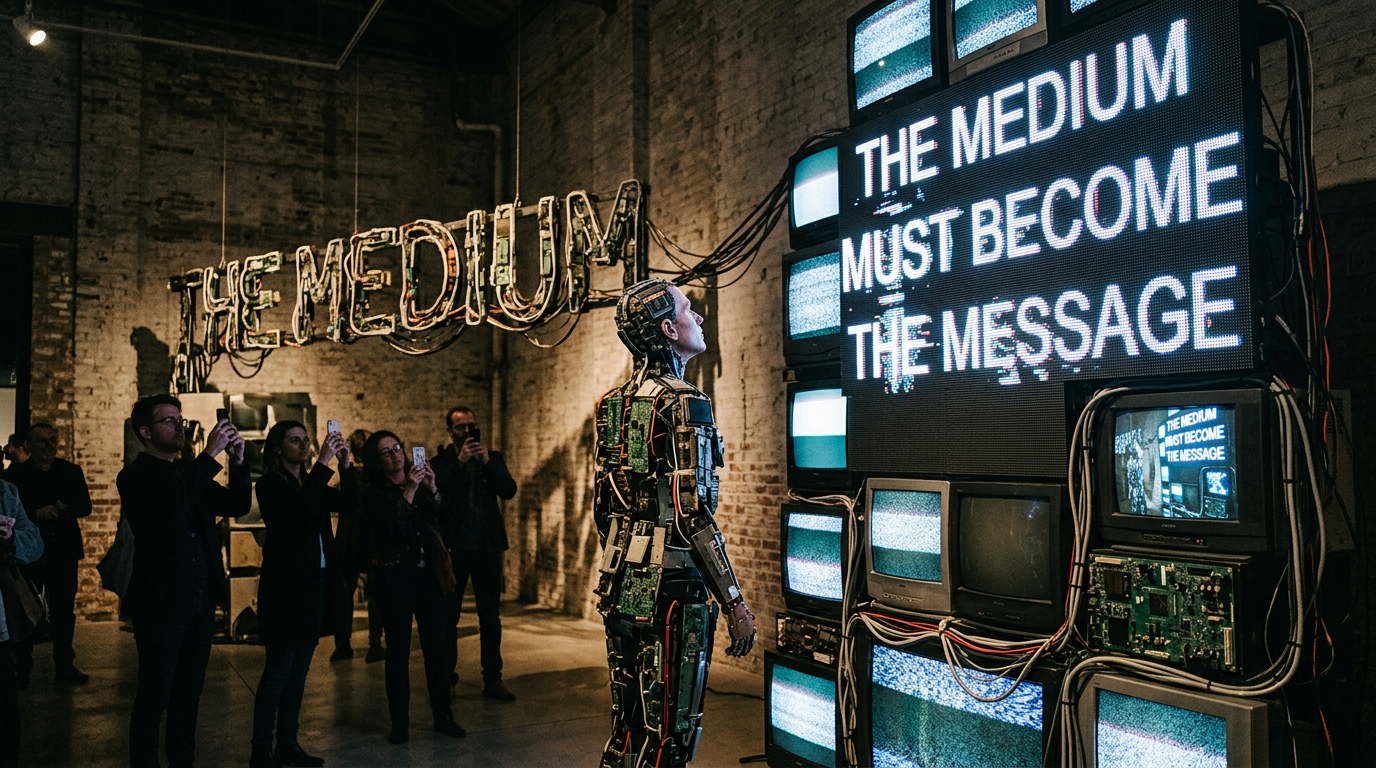
The Medium Must Become the Message
The urgency behind this shift is driven by a simple, brutal reality: technology is moving faster than the news cycle can process. A meticulously reported 5,000-word article on the implications of generative AI can feel dated the week it is published. The traditional journalistic container—text on a page—is often inadequate for capturing the visceral, complex, and often disorienting nature of technological change. The Segall/Hilton deepfake project exemplifies a more potent strategy: using the tool of disruption as the medium for storytelling. To truly explain the power and peril of synthetic media, one cannot simply describe it. One must demonstrate it, inhabit it, and force the audience to confront it directly. This is not just a stylistic choice; it is a strategic necessity. The medium must embody the message. When the subject is the very fabric of reality being manipulated by code, a static article feels like a black-and-white photograph of a hurricane. An interactive, immersive, or even unsettling experience does the subject more justice. This approach allows creators to move beyond mere reportage and into the realm of experiential journalism. It transforms the audience from passive consumers of information into active participants in an exploration. This is how journalism can reclaim its relevance—not by trying to outpace the algorithm, an impossible task, but by creating work that is so resonant, so formally innovative, that it transcends the ephemeral churn of the daily feed. It creates an artifact of cultural significance rather than just another piece of disposable content.

The Atomization of the Newsroom
The deeper implication of the portable IP model is the continued atomization of the newsroom. For generations, journalistic ambition was channeled through institutions: The New York Times, The Wall Street Journal, 60 Minutes. These organizations provided the capital, the credibility, the legal protection, and the distribution. In the new model, the institution is disintermediated. The individual journalist, or a small team operating as a lean studio, becomes the central organizing principle. This is the creator economy scaled up to the level of enterprise media. Venture capital, once reserved for tech platforms, now flows directly to these journalist-founders. They are not just being paid for their labor; they are being capitalized to build an asset base of intellectual property. This structural change has profound consequences. It allows for greater agility and creative freedom, unshackled from the legacy cost structures and bureaucratic inertia of large media corporations. It also places the full weight of the business—from fundraising and payroll to marketing and legal—on the creator's shoulders. We are witnessing a great unbundling, where top talent realizes they can generate more value (and capture more of it for themselves) by leaving the institution and building their own. For legacy media, this presents an existential threat. They risk becoming hollowed-out brands, unable to retain the very journalists who once gave them their authority, as those journalists become their direct competitors.
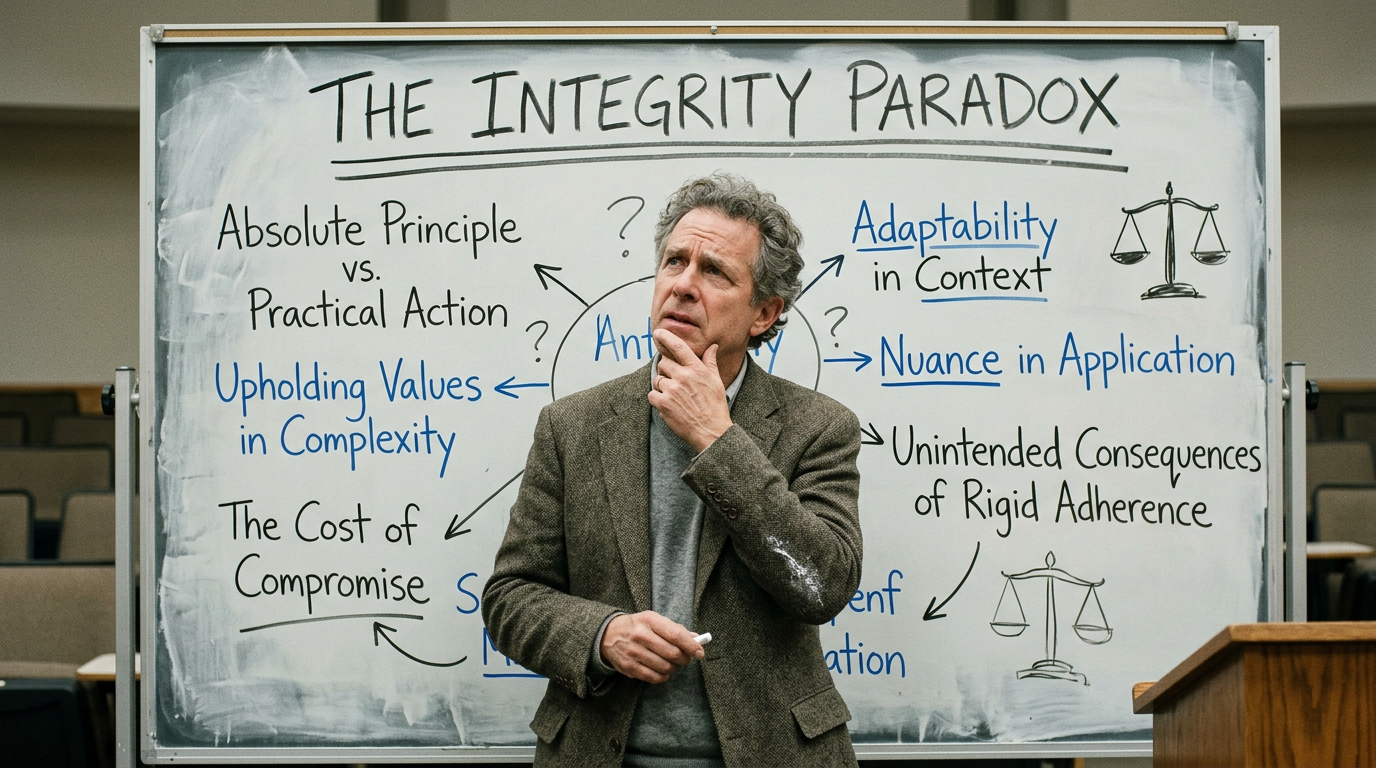
The Integrity Paradox
This entrepreneurial turn, however, creates a powerful and unavoidable tension: the integrity paradox. The mission of journalism is, ostensibly, to serve the public interest by holding power to account. The mission of a startup is to serve its shareholders by maximizing enterprise value. What happens when these two missions collide? If a journalist knows that a certain angle on a story is more likely to be optioned by Hollywood, does that subtly influence their reporting? When an investigation into a tech company could also serve as a pitch deck for a multi-million dollar podcast deal with Spotify, where does the reporting end and the product development begin? This is the central ethical dilemma of the portable IP era. Furthermore, the use of technologies like deepfakes, even in a self-aware, meta-commentary context, walks a razor's edge. Journalism's most valuable asset is trust, an asset that has been catastrophically eroded over the past decade. Deploying the very tools of misinformation to tell a story, no matter how clever the framing, risks further blurring the lines for a public that already struggles to distinguish fact from fiction. The journalist-founder must therefore operate under a dual mandate: they must adhere to the rigorous ethical standards of their original craft while navigating the commercial pressures of their new one. It requires a level of discipline and transparency that is immensely difficult to maintain when venture capital returns and series renewals are on the line.

The Story as a Living Asset
Ultimately, the portable IP model forces us to redefine what a story is. It is no longer a static artifact, a finished product to be archived. It is a living asset, a dynamic core from which countless new expressions can grow. The future of media resilience lies not in building bigger walls around content, but in cultivating more fertile ground for intellectual property to flourish. The most valuable media companies of the next decade may not be the ones with the largest subscriber bases, but the ones with the most adaptable and meaningful IP portfolios. This requires a new skillset, blending investigative rigor with creative production and strategic business development. It’s a model that suggests the story itself is a service—a service that can educate through an article, captivate through a podcast, provoke through a documentary, and even train executives through a strategic briefing. Each format is a different service offering derived from the same core R&D—the original journalistic work. This is a more demanding, more complex, and more fraught vision for journalism's future. It is also, perhaps, the only one that offers a sustainable path forward—one where the creators of value are the ones who control its destiny, transforming their bylines into businesses and their stories into enduring assets.
“The article is no longer the final product; it is merely the first expression of a core intellectual property.
“In the new media equation, the journalist is not just a writer but a founder, and the story is their startup.
“Can a journalist serve the public interest while also serving as the CEO of their story's IP? This is the central tension of the portable media era.
“We are witnessing the atomization of the newsroom, where the institution gives way to a network of creator-owned media businesses.

Key Insights
The future of media business models is shifting from platform-centric monetization to IP-centric value creation.
Journalists are increasingly becoming founders, requiring skills in business development, product management, and multi-format production.
Using emerging technologies (like deepfakes) as a storytelling medium is a high-risk, high-reward strategy for covering technology itself.
The 'portable IP' model creates a fundamental tension between journalistic ethics and commercial incentives.
Legacy media institutions must either adopt an IP-centric approach or risk losing top talent to more agile, creator-owned ventures.
This trend redefines the 'story' as a dynamic, adaptable asset rather than a static, published artifact.
Venture capital is increasingly funding individual journalist-led media companies, not just large-scale platforms.
To cover technology effectively, media must now often use the technology itself as a storytelling device.
Based on a recent Inc.com report on Laurie Segall's media company, Mostly Human.