
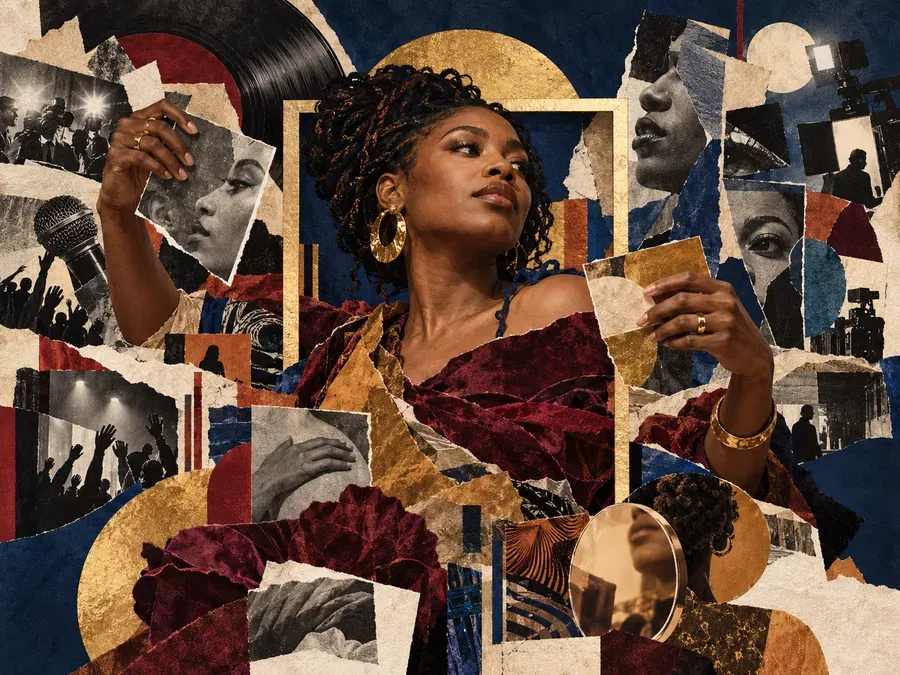
The Art of Reclaiming the Narrative: From Cultural Milestones to Personal Truths
We live in a culture that loves to consume Black creativity, gossip, and resilience, but rarely pauses to examine the human cost behind the headlines. When we look at the cultural zeitgeist, five seemingly distinct stories reveal a deeper, collective conversation about how Black women protect their peace, claim their brilliance, and navigate a world that often tries to rewrite their stories.
Honoring the Root: The Foundation of Black Music
Every June, Black Music Month reminds us of the profound impact Black creators have had on global culture. It’s a time to center the facts: Black music is not just entertainment; it is the blueprint of modern sound, born out of survival, joy, and resistance. Yet, the celebration of the art form often contrasts sharply with how the creators themselves—particularly Black women—are treated when they step outside the studio and into the cultural spotlight.
The Weight of Public Perception
Take, for instance, the recent discourse surrounding multi-hyphenate star Cynthia Erivo. When the internet turned her casting and aesthetic choices into a punchline, Erivo didn't just laugh it off. Cynthia Erivo’s response to the 'Bodyguard' jokes cut straight to the heart of the issue: "It's about how we view Black women."
Her critique highlights a painful double standard. While Black music and culture are celebrated globally, living Black women are frequently subjected to hyper-scrutiny, dehumanizing memes, and a lack of grace. It begs the question: Why is Black creativity so easily worshiped, while Black womanhood is so easily picked apart?
3. Credit, Ownership, and the Beauty Industry
This lack of grace and respect extends past Hollywood and directly into the entrepreneurial world. The beauty industry was recently set ablaze when makeup mogul Patrick Ta was accused of stealing Painted By Esther's blush technique.
This situation mirrors a historic, exhausting pattern: independent Black creators innovating a style, technique, or sound, only for larger, mainstream entities to adopt it without proper attribution. Celebrating Black Music Month means nothing if we do not also protect and credit the living Black artists and creators, like Esther, who are shaping today’s aesthetic landscape.
Navigating Public Betrayal
When Black women aren’t fighting for credit or respect in their careers, they are often forced to be "strong" in the face of deeply personal, public pain. Gayle King recently detailed the agonizing experience of catching her ex-husband cheating in her own home.
King’s willingness to speak on such a raw, private betrayal speaks to the immense burden of public life. For decades, Black women have been expected to handle trauma with quiet dignity, shielding the world from their hurt while maintaining a flawless exterior.
Embracing the Freedom of the Mess
So, how do you survive a world that demands your perfection but minimizes your pain? You do what Tia Mowry is doing. In a culture obsessed with curated, filtered lives, Tia Mowry is learning to embrace the mess.
Mowry’s philosophy is perhaps the ultimate act of resistance for Black women today. By letting go of the pressure to be the "Strong Black Woman" who has it all figured out, she reclaims her right to be human, to make mistakes, and to heal out loud.
The Takeaway
When we connect the dots, these headlines tell a singular, powerful story. Whether it is remembering the history of Black music, demanding respect for a star like Cynthia Erivo, fighting for creative credit like Esther, surviving betrayal like Gayle King, or finding peace in the chaos like Tia Mowry—the message is clear:
It is time to stop just consuming Black women's culture, and start protecting, crediting, and humanizing the women who create it.